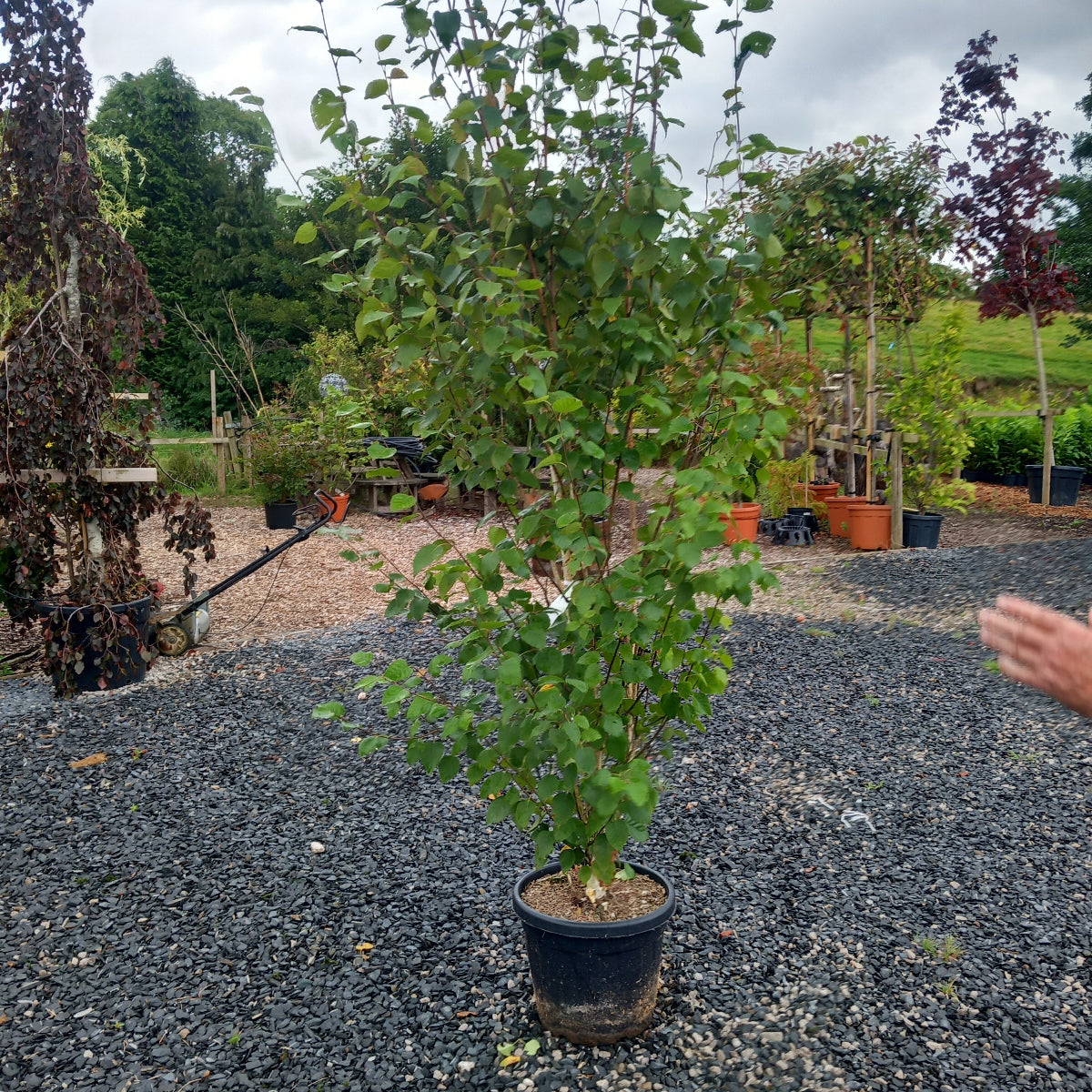
Betula jacqumonte Silver Birch 2,4 meters tall
Betula jacquemontii — Himalayan Birch
A stunning ornamental tree renowned for its brilliant white peeling bark and graceful form, perfect for adding year-round interest to UK gardens.
Key Features
- Brilliant White Bark: Distinctive bright white peeling bark — one of the whitest of all birch species
- Spring Catkins: Long, yellow-brown male catkins appear in early spring before leaves emerge
- Attractive Foliage: Dark green leaves provide excellent summer coverage with good autumn colour
- Year-Round Interest: Striking white stem provides strong winter structure and visual appeal
- Hardy & Reliable: Fully hardy and well-suited to UK climate
Growing Information
Ultimate Height: 12–18m
Ultimate Spread: 8–10m
Growth Rate: Moderate to fast
Position: Full sun to partial shade
Soil: Moist, well-drained soil
Hardiness: Fully hardy (H7)
Planting & Care
Plant in autumn or early spring in moist, well-drained soil. Position in full sun for best bark colour development. Water regularly during the first growing season to establish a deep root system. Mulch around the base to retain moisture and suppress weeds. Minimal pruning required — remove any dead or damaged branches in late winter. The distinctive white bark becomes more pronounced as the tree matures.
Perfect For
- Specimen planting as a focal point
- Woodland gardens and naturalistic planting
- Adding winter interest with brilliant white bark
- Large gardens and parkland settings
- Wildlife gardens — catkins provide early pollen for bees
Why Choose Betula jacquemontii?
Betula jacquemontii is prized above all birches for the purity of its white bark — a striking year-round feature that glows in low winter light. Combined with graceful summer foliage and early spring catkins, this is a tree that offers genuine multi-season appeal with minimal maintenance. An outstanding specimen tree for any garden large enough to accommodate it.
Available at Stoneybrook Nursery, Lancashire — Premium ornamental trees for UK gardens.
Couldn't load pickup availability
Low stock: 2 left

More details.
Planting Instructions
Plant in autumn or early spring in moist, well-drained soil. Full sun gives the best bark colour development, though partial shade is tolerated. Betula jacquemontii is tolerant of a range of soil types but performs best in soils that retain some moisture without becoming waterlogged.
Dig a hole twice the width of the root ball and to the same depth as the pot. Remove the tree from its container, gently tease out any circling roots, and position so the top of the root ball sits level with the surrounding soil. Backfill with the excavated soil, firm in well, and water thoroughly.
Apply a 5–7cm mulch of bark or compost around the base (keeping it clear of the stem) to retain moisture and suppress weeds. Water regularly throughout the first growing season, particularly during dry spells. Stake the tree securely for the first two to three years until established. Minimal pruning is required — remove any dead or damaged branches in late winter.
Size & Specification
Supplied as a pot-grown tree at approximately 2.4m tall. Ultimate height 12–18m, ultimate spread 8–10m if left unpruned. Growth rate moderate to fast. The distinctive bright white bark becomes increasingly pronounced as the tree matures.
Due to size and weight, this tree is dispatched on a pallet via specialist courier. Please ensure adequate access for delivery.
Delivery & Dispatch
Supplied as a container-grown tree at approximately 2.4m tall. Due to size and weight, dispatched on a pallet via specialist courier. A kerbside delivery will be arranged and you will be contacted to confirm a suitable delivery date.
Please ensure someone is available to receive the delivery. If you have access restrictions (e.g. narrow lanes or limited turning space), please contact us before ordering so we can advise on the most suitable delivery method.
Wildlife & Ecological Notes
Betula jacquemontii is closely related to native UK birch species and offers significant wildlife value. The long male catkins in early spring provide an important early source of pollen for bees and other emerging pollinators. Seeds are eaten by siskins, redpolls, and other small birds throughout autumn and winter.
The bark, leaves, and branches support a wide range of invertebrates, and birch trees are among the most ecologically rich trees in the UK landscape. Ideal for wildlife-friendly planting schemes and naturalistic gardens.