
Carpinus betulus Roman Arch (PRE-ORDER ONLY)
Carpinus betulus Roman Arch (PRE-ORDER ONLY)
Carpinus betulus Roman Arch (PRE-ORDER ONLY)
Common Hornbeam Roman Arch
Create a stunning architectural statement with this magnificent pre-trained Hornbeam Roman arch. This elegant living structure combines the timeless beauty of Common Hornbeam with classical Roman arch styling, perfect for creating a dramatic entrance or focal point in your garden.
Why Choose a Hornbeam Roman Arch?
- Instant architectural impact - arrives pre-trained and ready to install
- Classic Roman arch design adds timeless elegance to any garden
- Dense foliage creates a beautiful green tunnel effect
- Retains attractive brown leaves through winter for year-round structure
- Perfect for formal gardens, country estates, and traditional landscapes
- Creates stunning garden entrances, pathways, or focal points
- Hardy and adaptable to most soil types, including heavy clay
- Low maintenance once established
About Hornbeam: A large deciduous tree that develops a distinctive fluted grey trunk with age. Features ovate leaves 5-8cm long with conspicuous ribbing that turn golden yellow in autumn. Produces catkins in spring followed by attractive hop-like fruiting catkins up to 8cm long. Excellent for woodland settings and formal structures.
Growing Conditions: Thrives in full sun to partial shade in well-drained to moist soil. Particularly suited to heavy clay soils where beech may struggle. Hardy and tolerant of exposed positions.
Please Note: This is a pre-order item. Contact us for availability, sizing, and delivery timescales.
Couldn't load pickup availability
In stock
View full details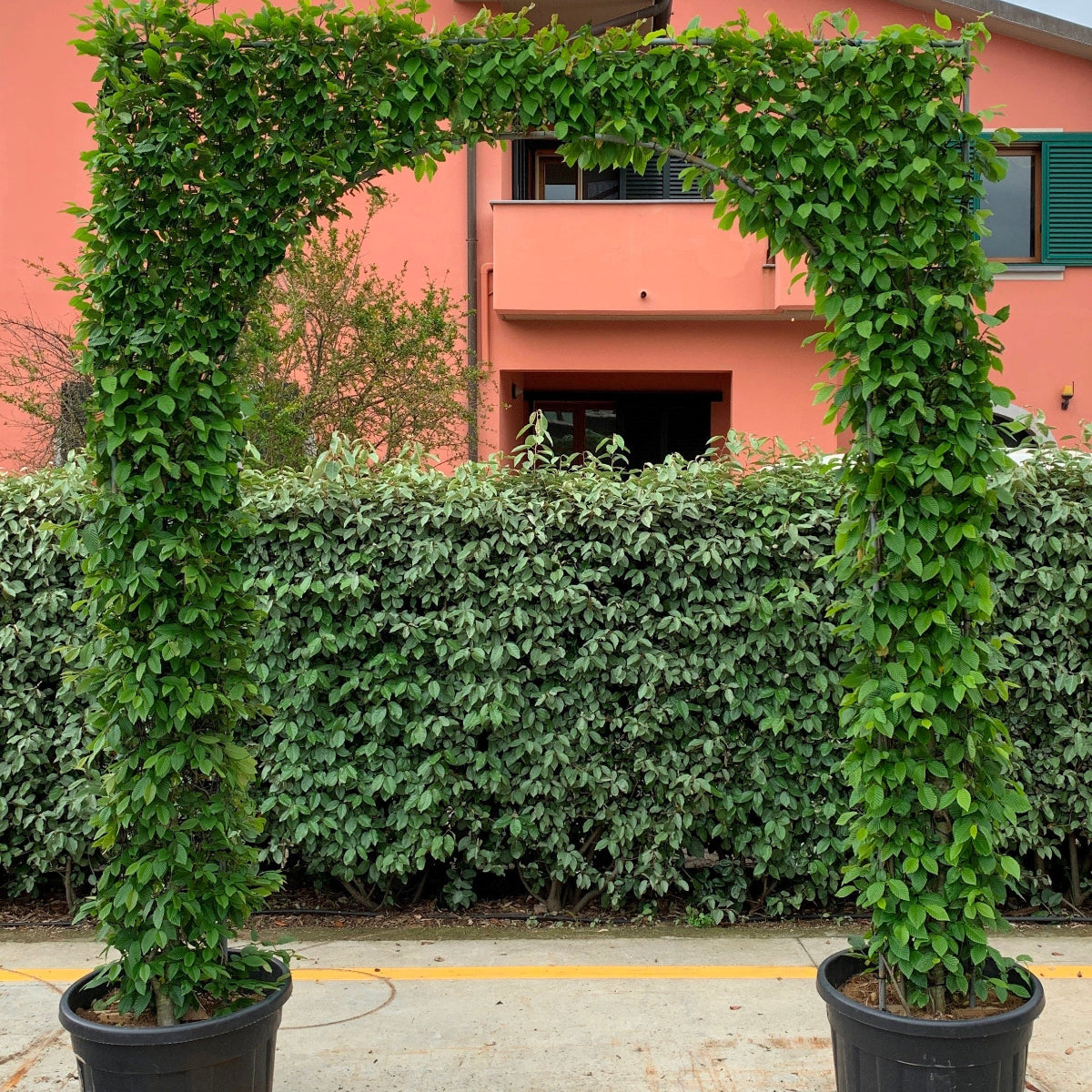
Collapsible content
Planting Instructions
Planting Instructions
Hornbeam Roman arches are delivered pre-trained and ready to install. Choose a position that allows the full span of the arch to be appreciated — typically a path, gateway, or garden entrance.
- Dig two planting pits, one for each leg, to at least twice the width of the root ball and the same depth
- Incorporate well-rotted organic matter into the backfill to aid establishment
- Hornbeam tolerates heavy clay soils well — no grit needed unless waterlogging is severe
- Position carefully to ensure the arch is level and both legs are equally spaced
- Water thoroughly after planting and apply a mulch ring (5–10cm) around each leg, keeping mulch away from stems
- Stake securely if exposed to wind during the first growing season
- Trim lightly in late summer to maintain the arch shape; avoid hard pruning in the first year
Size & Specification
Size & Specification
This is a large bespoke architectural structure. Dimensions vary by individual specimen — please contact us for exact sizing, span width, and height before ordering.
- Species: Carpinus betulus (Common Hornbeam)
- Form: Pre-trained Roman arch on twin stems
- Supplied: Pot-grown or root-balled depending on season
- Typical arch height: 2–3m (contact us to confirm)
- Typical span width: 1–2m (contact us to confirm)
- Weight: approximately 30kg — professional installation recommended
Delivery & Dispatch
Delivery & Dispatch
This is a PRE-ORDER item. Due to its size and bespoke nature, delivery is arranged individually — please contact us after ordering to confirm timescales and logistics.
- Delivered by specialist pallet or flatbed courier — not standard parcel delivery
- Delivery to kerbside; customer responsible for positioning and installation
- Lead times vary — typically 2–6 weeks depending on availability and season
- We will contact you to arrange a suitable delivery date after your order is placed
- Lancashire-based nursery — UK mainland delivery only
Wildlife & Ecological Notes
Wildlife & Ecological Notes
Common Hornbeam (Carpinus betulus) is a native British woodland tree with strong ecological value, supporting a wide range of wildlife throughout the seasons.
- Catkins provide early pollen for bees and other pollinators in spring
- Seeds (nutlets in hop-like catkins) are eaten by finches, tits, and small mammals
- Dense branching provides nesting habitat and cover for birds
- Supports numerous moth and invertebrate species associated with native woodland
- Retained winter foliage offers additional shelter for overwintering insects and birds
- UK native — well adapted to local soils, climate, and wildlife communities