
Carpinus betulus Fastigiata - Upright Hornbeam Tree
Carpinus betulus Fastigiata - Upright Hornbeam Tree
Carpinus betulus Fastigiata — Elegant Upright Hornbeam
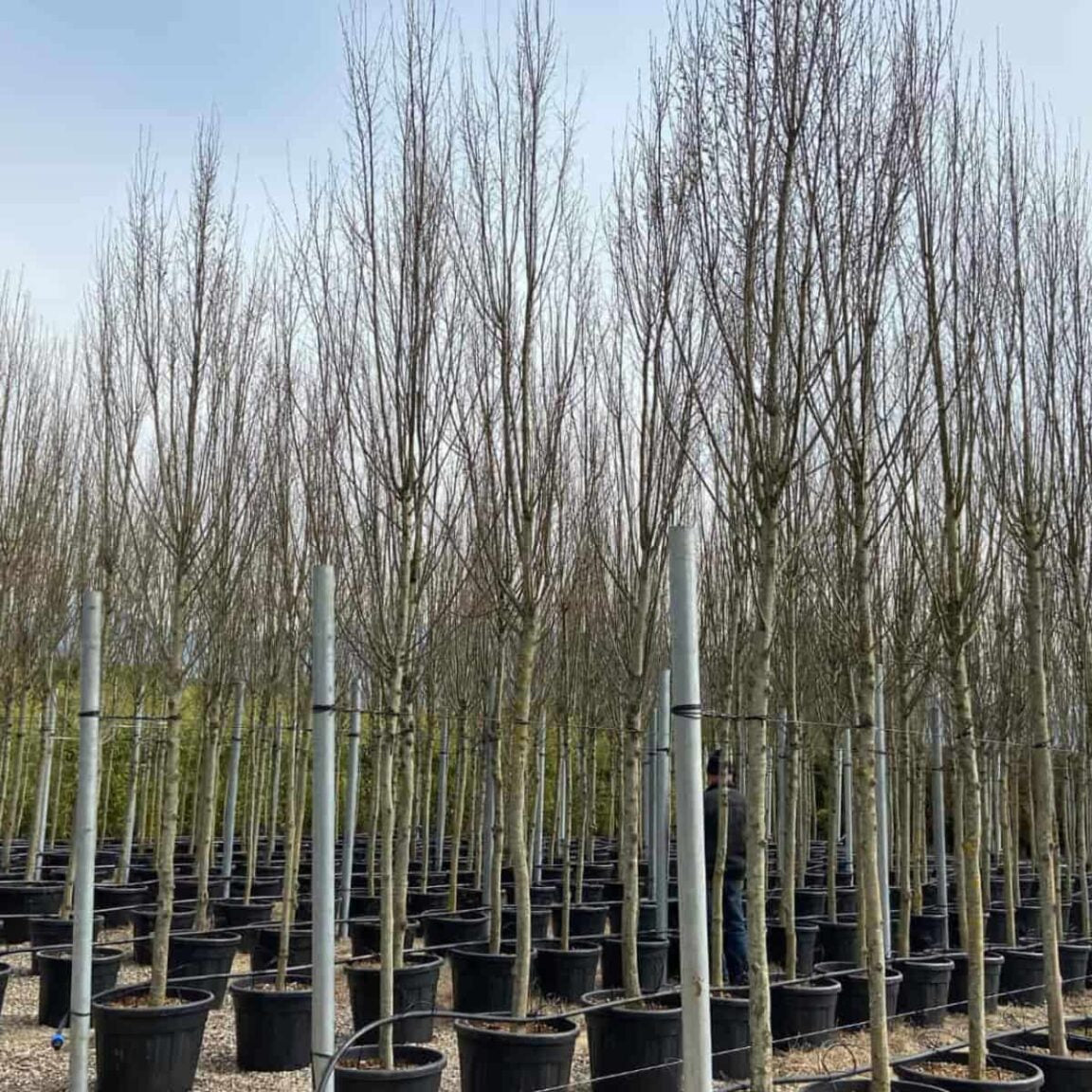
Create formal structure and year-round impact with Carpinus betulus Fastigiata, the distinguished upright hornbeam renowned for its compact columnar form and elegant branching. Perfect for formal avenues, narrow spaces, and architectural planting where vertical presence matters.
Why Choose Fastigiata Hornbeam?
- Compact columnar form - upright branching creates a neat, space-saving silhouette
- Year-round structure - architectural presence in all seasons with retained autumn leaves
- Golden autumn colour - leaves turn rich yellow-gold before persisting through winter
- Formal elegance - ideal for avenues, pleached hedging, and contemporary landscapes
- Hardy and adaptable - thrives in most UK soils including heavy clay and exposed sites
Perfect For
Ideal for formal avenues, narrow driveways, street tree planting, and tight spaces where a columnar tree is needed. Excellent for pleached hedging on stilts or as a specimen tree in contemporary gardens. Thrives in full sun to partial shade and tolerates urban pollution, coastal exposure, and heavy clay soils.
Planting & Care
Plant autumn to spring in well-drained to moisture-retentive soil. Tolerates most soil types including chalk and clay. Water regularly during establishment. Minimal pruning required - trim in late summer if shaping needed for pleached forms. Mulch annually to retain moisture and suppress weeds.
Delivered as premium nursery-grown specimens ready to create instant formal structure in your garden.
Couldn't load pickup availability
Low stock: 2 left
More details.
Planting Instructions
Planting Instructions
Carpinus betulus Fastigiata establishes readily in most UK conditions. Plant between autumn and spring for best results, avoiding frozen or waterlogged ground.
- Dig a planting pit at least twice the width of the root ball and the same depth
- Incorporate well-rotted organic matter into the backfill to aid establishment
- Hornbeam tolerates heavy clay and chalk soils — excellent for difficult sites
- Water thoroughly after planting and apply a 5–10cm mulch ring, keeping mulch clear of the stem
- Stake for the first 1–2 seasons in exposed positions
- Trim lightly in late summer to maintain the columnar form if required
- Once established, Fastigiata Hornbeam is low maintenance and highly self-sufficient
Size & Specification
Size & Specification
Supplied as premium nursery-grown pot-grown specimens. Please contact us to confirm exact sizing available at time of order.
- Species: Carpinus betulus Fastigiata (Upright Hornbeam)
- Form: Columnar / fastigiate — narrow upright habit
- Mature height: 8–15m; spread: 3–5m (slow to medium growth rate)
- Supplied: Pot-grown or root-balled depending on season and availability
- Approximate weight: 30kg — two-person lift or mechanical handling recommended
Delivery & Dispatch
Delivery & Dispatch
Delivered as premium pot-grown or root-balled specimens from our Lancashire nursery. Larger specimens are dispatched on pallets to ensure safe arrival.
- Smaller specimens: dispatched by specialist plant courier, typically within 3–5 working days
- Larger specimens: delivered by pallet courier — kerbside delivery, please arrange offloading
- We will contact you to confirm delivery details after your order is placed
- UK mainland delivery only — Lancashire-based nursery
- For urgent orders or specific delivery date requests, please contact us before ordering
Wildlife & Ecological Notes
Wildlife & Ecological Notes
Carpinus betulus is a native British woodland tree with excellent ecological credentials, supporting wildlife across all seasons.
- Catkins provide early-season pollen for bees and other pollinators
- Seeds (hop-like nutlets) eaten by finches, tits, and small mammals
- Dense upright canopy provides nesting sites and shelter for birds
- Supports numerous moth species and invertebrates associated with native woodland
- Retained winter foliage offers additional cover for overwintering wildlife
- UK native — fully adapted to local soils, climate, and wildlife communities