

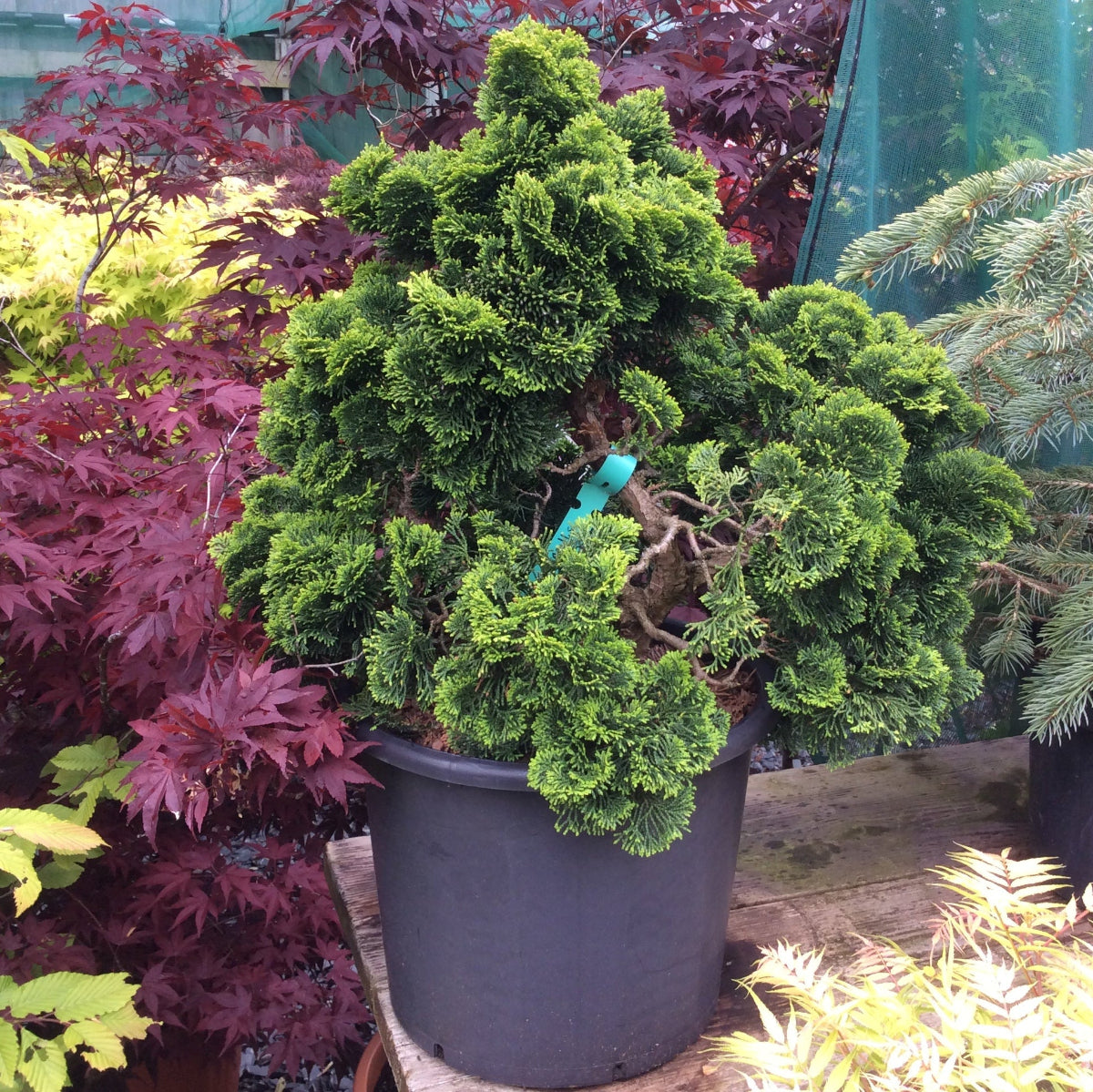
Chamaecyparis obtusa 'Nana Gracilis' – Dwarf Hinoki Cypress
Chamaecyparis obtusa 'Nana Gracilis' – Dwarf Hinoki Cypress
Chamaecyparis obtusa 'Nana Gracilis' – Dwarf Hinoki Cypress
Discover the timeless elegance of this compact, slow-growing evergreen shrub. The Dwarf Hinoki Cypress is prized for its rich, dark green foliage arranged in distinctive shell-like sprays, making it a perfect choice for small gardens, containers, and bonsai cultivation.
Key Features
- Compact, slow-growing habit ideal for small spaces and container planting
- Rich dark green foliage with distinctive shell-like spray formation
- Year-round evergreen interest maintains beauty through all seasons
- Perfect for bonsai and Japanese-inspired garden designs
- Low-maintenance once established in the right conditions
Growing Conditions
This versatile evergreen thrives in partial shade to full sun and prefers moist, well-drained soil. Its naturally compact form requires minimal pruning, making it an excellent choice for low-maintenance gardens. The dense, layered foliage creates wonderful texture and structure in beds, borders, or as a feature plant in containers.
Planting & Care
Plant in a sheltered position with good drainage. Water regularly during dry spells, especially when grown in containers. This hardy shrub is well-suited to UK climates and requires little maintenance beyond occasional watering and light shaping if desired.
Couldn't load pickup availability
Low stock: 3 left

More details.
Planting Instructions
Planting Instructions
Chamaecyparis obtusa 'Nana Gracilis' is an undemanding evergreen that establishes well in most UK gardens. Plant in spring or autumn in a sheltered position with good drainage.
- Choose a position in partial shade to full sun — avoid deep shade or waterlogged ground
- Dig a planting pit twice the width of the root ball and the same depth
- Prefers moist, well-drained, slightly acidic soil; tolerates most UK soils if drainage is good
- Incorporate well-rotted organic matter into the backfill to aid establishment
- Water thoroughly after planting; apply a mulch ring to retain moisture
- Water regularly during dry spells in the first growing season, especially in containers
- Minimal pruning required — light shaping in spring if needed to maintain form
- For container growing: use a good quality, free-draining compost and ensure the pot has drainage holes
Size & Specification
Size & Specification
Supplied as a premium nursery-grown specimen. Contact us to confirm exact sizing available at time of order.
- Species: Chamaecyparis obtusa 'Nana Gracilis' (Dwarf Hinoki Cypress)
- Form: Compact, slow-growing conifer with tiered shell-like foliage sprays
- Mature height: 1–2m over many years (very slow growing)
- Mature spread: 0.5–1m
- Approximate weight: 20kg
- Suitable for containers, borders, rockeries, and bonsai cultivation
Delivery & Dispatch
Delivery & Dispatch
Delivered as a quality specimen plant, carefully packaged for safe transit from our Lancashire nursery.
- Dispatched by specialist plant courier — typically within 3–5 working days
- Larger specimens delivered by pallet courier — kerbside delivery, please arrange offloading
- Carefully packaged to prevent transit damage
- UK mainland delivery only
- We will contact you to confirm delivery details after your order is placed
Wildlife & Ecological Notes
Wildlife & Ecological Notes
Though not a native species, Chamaecyparis obtusa 'Nana Gracilis' provides useful year-round structure and shelter in the garden, contributing modestly to local wildlife habitat.
- Dense evergreen foliage provides shelter and roosting spots for small birds year-round
- Provides cover for overwintering insects within the layered foliage
- Compact form makes it suitable for small urban and patio gardens where wildlife planting space is limited
- Best paired with native flowering plants nearby to maximise overall garden biodiversity