
Clematis montana 'Grandiflora' – White Mountain Clematis
Clematis montana 'Grandiflora' – White Mountain Clematis
Clematis montana 'Grandiflora' – White Mountain Clematis
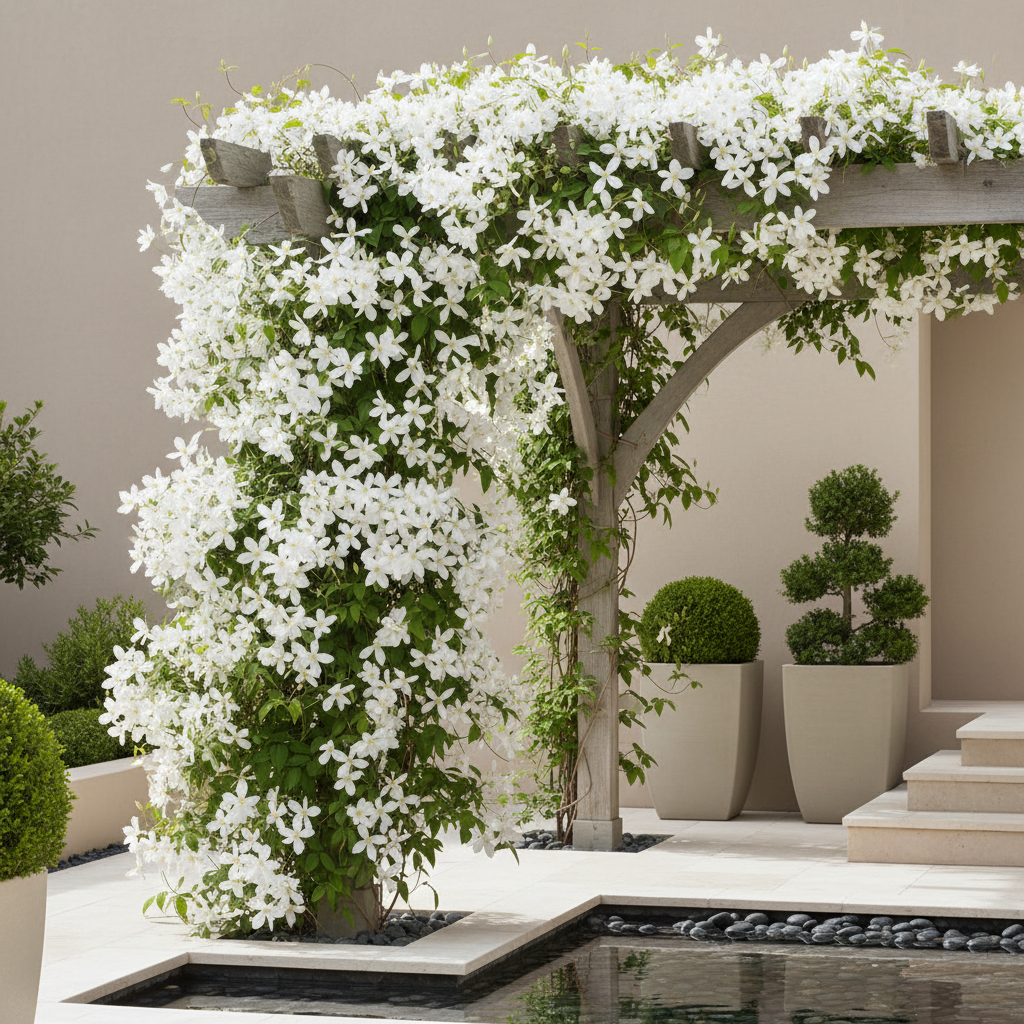
Clematis montana 'Grandiflora' is one of the most spectacular and free-flowering of all climbing plants. In late spring, its vigorous stems are completely smothered in a breathtaking cascade of pure white, four-petalled flowers — each with a delicate boss of cream stamens — creating a cloud-like display that can stop a garden in its tracks. Sweetly scented and incredibly vigorous, it will rapidly clothe a wall, fence, pergola, or large tree, transforming even the most utilitarian structure into something truly beautiful.
Why Choose 'Grandiflora'
- Masses of pure white flowers in May and June — one of the most floriferous clematis varieties
- Sweet, vanilla-like fragrance — particularly noticeable on warm, still days
- Exceptionally vigorous — will cover a large wall or pergola in just a few seasons
- Deciduous — attractive fresh green foliage through summer after flowering
- Ideal for covering unsightly structures, fences, and outbuildings quickly
- RHS Award of Garden Merit (AGM) variety
Growing Guide
- Position: Full sun to partial shade; roots prefer to be cool and shaded
- Soil: Moist, well-drained, fertile; neutral to slightly alkaline
- Hardiness: Fully hardy (RHS H6)
- Ultimate height: 8–10m — a truly large climber; allow plenty of space
- Pruning: Group 1 — prune lightly immediately after flowering if required; avoid hard pruning
Planting & Care Tips
- Plant with the crown at soil level; shade the roots with a tile, stone, or low planting
- Provide a sturdy support structure — this is a vigorous, heavy climber at maturity
- Water well during the first growing season to establish a strong root system
- Mulch around the base each spring to retain moisture and keep roots cool
Couldn't load pickup availability
Out of stock
More details.
Planting Instructions
Planting Instructions
Clematis montana 'Grandiflora' is vigorous and easy to establish. Plant in spring or autumn with its roots in cool, shaded soil and its top growth in sun or partial shade.
- Choose a position in full sun to partial shade — roots must be kept cool and shaded
- Plant with the crown at soil level — shade the root zone with a tile, stone, or low ground cover planting
- Dig a planting pit at least twice the width of the pot and the same depth; incorporate organic matter
- Moist, well-drained, fertile soil preferred; neutral to slightly alkaline pH
- Provide a sturdy support structure — this is a vigorous, heavy climber at maturity (8–10m)
- Water well throughout the first growing season to establish a strong root system
- Mulch around the base each spring to retain moisture and keep roots cool
- Pruning Group 1: prune lightly immediately after flowering if required; avoid hard pruning into old wood
Size & Specification
Size & Specification
Supplied in a 3 litre pot as a healthy, established climbing plant ready to plant out.
- Species: Clematis montana 'Grandiflora' (White Mountain Clematis)
- Form: Vigorous deciduous climber
- Supplied in: 3 litre pot
- Ultimate height: 8–10m — allow plenty of space and a sturdy support
- Flowering period: May to June
- Hardiness: RHS H6 — fully hardy throughout the UK
- RHS Award of Garden Merit (AGM) variety
Delivery & Dispatch
Delivery & Dispatch
Supplied in a 3 litre pot. Grown and dispatched from Stoneybrook Nursery in Lancashire. All plants are carefully packaged to arrive in excellent condition, ready to plant.
- Dispatched by specialist plant courier — typically within 3–5 working days
- Carefully packaged to prevent transit damage
- UK mainland delivery only
- For specific delivery date requests, please contact us before ordering
Wildlife & Ecological Notes
Wildlife & Ecological Notes
Clematis montana 'Grandiflora' is an excellent wildlife plant, providing abundant nectar-rich flowers in May and June when many pollinators are at peak activity.
- Masses of flowers provide nectar and pollen for bees, hoverflies, and other pollinators in late spring
- Vigorous stems and dense foliage provide excellent nesting habitat and cover for birds
- Seed heads persist into autumn, providing food for finches and small birds
- Ideal for covering fences and walls where wildlife corridors are otherwise limited
- Sweet fragrance particularly attractive to early-flying bumblebee queens in warm spring weather