
Cornus alba 'Sibirica' – Red Dogwood Bare Root Hedging 60-90cm x25
Cornus alba 'Sibirica' – Red Dogwood Bare Root Hedging 60-90cm x25
⚠️ PRE-ORDER — Limited stock available. Secure your order now. Due to drought conditions during the growing season, availability is restricted this year.
Cornus alba 'Sibirica' – Red Dogwood Bare Root Hedging
Cornus alba 'Sibirica' is a stunning deciduous shrub prized for its brilliant crimson winter stems that bring vibrant colour to British gardens when most plants are dormant. Available as bare root hedging in bundles of 25 plants, 60–90cm tall.
Why Choose Red Dogwood?
Red Dogwood creates a spectacular winter display with slender stems that turn bright crimson as temperatures drop. This medium-sized suckering shrub forms a dense thicket perfect for hedging or mixed borders. Ovate green foliage turns reddish in autumn, while small cream flat-headed flowers appear in spring and summer, followed by blue-white berries that attract wildlife.
Key Features
- Brilliant crimson winter stems for year-round interest
- Cream flowers in spring and summer
- Blue-white berries for wildlife
- Autumn foliage colour
- Hardy and adaptable to most UK soils
- Perfect for winter colour schemes
Planting & Care
Plant 3–5 per metre for hedging. Thrives in moist soils and full sun to partial shade. For the brightest stem colour, prune hard in early spring (February/March) to encourage vibrant new growth. See our comprehensive planting guide for step-by-step instructions.
What You'll Receive
25 bare root plants, 60–90cm tall, carefully lifted and packed for optimal establishment. Bare root delivery is our most sustainable option — lighter packaging, lower carbon footprint, and healthier root systems that establish faster than pot-grown alternatives.
Pre-order: reserve your plants now for seasonal dispatch. Please check Delivery & Dispatch below for expected timing before ordering.
Couldn't load pickup availability
In stock
View full details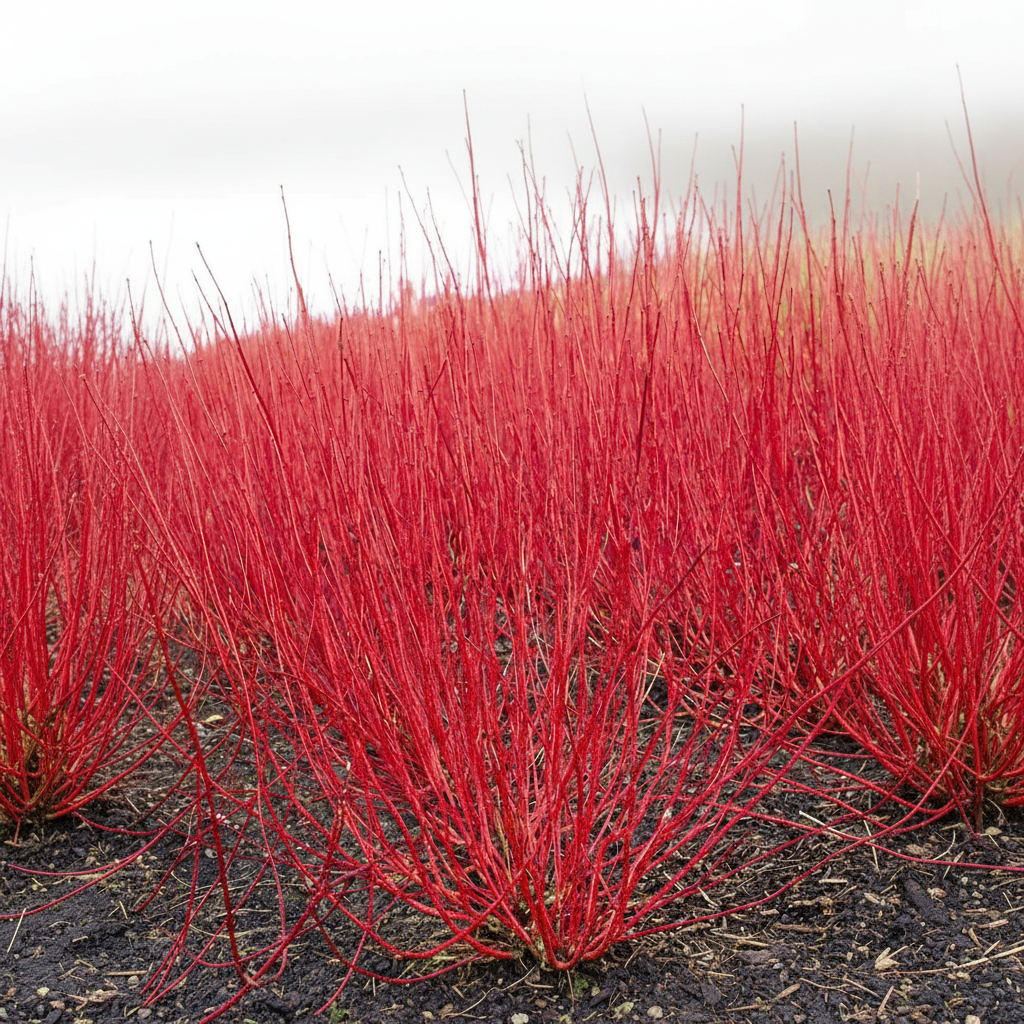
More details
Planting Instructions
Planting Instructions
Plant bare root Cornus alba between November and April when the plant is dormant. Red Dogwood is exceptionally adaptable and thrives in most soils, including wet and waterlogged conditions.
- Soak bare roots in water for 1–2 hours before planting
- Dig a hole wide enough to spread the roots without bending — plant to the nursery soil mark depth
- Space 3–5 plants per metre for a dense hedge
- Thrives in full sun to partial shade; tolerates wet, boggy, and waterlogged ground exceptionally well
- Firm in well and water thoroughly after planting
- Water during dry spells in the first growing season
- Cut back hard every 2–3 years in early spring (Feb/March) to encourage the brightest red stem colour and vigorous bushy regrowth
Size & Specification
Size & Specification
Supplied as 25 bare root plants, lifted and packed during the dormant season for optimal establishment.
- Species: Cornus alba 'Sibirica' (Red-barked Dogwood)
- Quantity: 25 bare root plants per bundle
- Height at dispatch: 60–90cm
- Form: Bare root — supplied dormant November to April
- Coverage: approximately 5–8 metres of hedging at 3–5 plants per metre
- Mature height: 2–3m if unpruned; easily kept lower with annual cutting
Delivery & Dispatch
Delivery & Dispatch
Bare root plants are dispatched between November and April during the dormant season. Orders placed outside this window will be held and dispatched at the start of the next bare root season.
- Dispatched November to April only — bare root season
- Free standard delivery to UK mainland
- Plants carefully bundled and wrapped to protect roots in transit
- UK mainland only — Lancashire-based nursery
- Contact us before ordering if you need a specific delivery date
Wildlife & Ecological Notes
Wildlife & Ecological Notes
Cornus alba is an excellent wildlife shrub, providing food, shelter, and habitat value across all seasons.
- Cream flowers in late spring and early summer attract bees, hoverflies, and other pollinators
- Blue-white berries in autumn eaten by Blackbirds, Thrushes, Warblers, and other birds
- Dense suckering growth provides nesting cover and shelter for birds and small mammals
- Particularly valuable in wet and riparian habitats, supporting specialist insect communities
- Vivid red winter stems provide structure and cover during the most difficult months for wildlife
- Native to northern and central Asia; naturalised and well-adapted to UK conditions