
Diospyros kaki - Japanese Persimmon | Exotic Fruit Tree
Diospyros kaki - Japanese Persimmon | Exotic Fruit Tree
Diospyros kaki - Japanese Persimmon for sale in UK Gardens
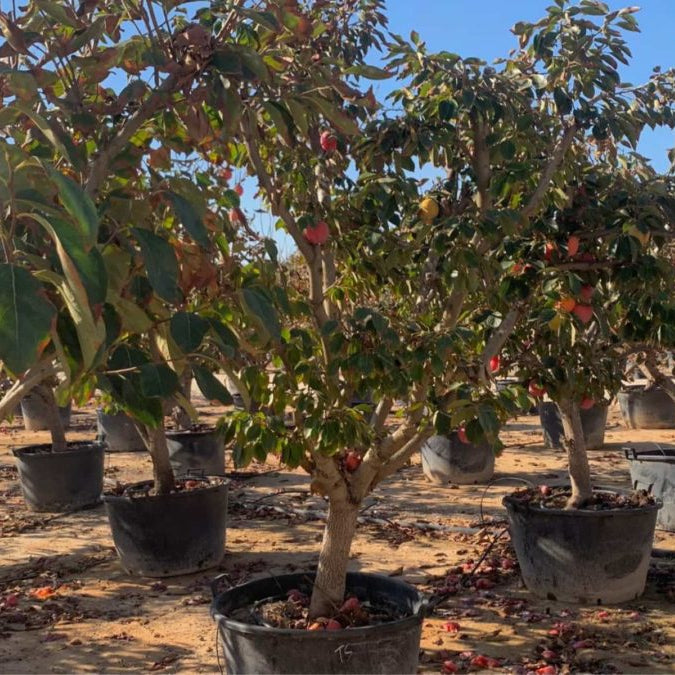
Diospyros kaki, the Japanese Persimmon, is an exceptional ornamental and fruiting tree that brings exotic beauty and delicious harvests to sheltered UK gardens. This deciduous tree produces stunning orange-red fruits in autumn alongside spectacular foliage colour, creating a dramatic display when most other fruit trees have finished their season. Available to buy as a pot grown plant and trained as a standard approximately 1.5m to 2.0m tall .
Key Features
- Large, sweet orange persimmon fruits ripen in October-November
- Spectacular autumn foliage in brilliant orange, red, and purple tones
- Attractive glossy green leaves throughout summer
- Ornamental fruits persist on bare branches into winter
- Self-fertile varieties available - no pollination partner needed
- Compact growth habit suitable for smaller gardens
- Hardy to -15°C once established in sheltered positions
Planting & Care
Plant Diospyros kaki in well-drained, fertile soil in a warm, sheltered position in full sun. Protection from cold winds and late frosts is essential for successful fruiting. Water regularly during establishment and fruit development. Mulch generously around the base to retain moisture and protect roots. Minimal pruning required - simply remove dead, damaged, or crossing branches in late winter. Fruits are ready to harvest when fully coloured and slightly soft to touch.
Ideal Uses
Perfect as an ornamental specimen tree in sheltered gardens, courtyards, and warm microclimates. Particularly valuable for adding exotic interest to fruit gardens and edible landscapes. The dramatic autumn colour and persistent fruits make it an excellent focal point. Ideal for south or west-facing walls where it benefits from reflected warmth. Pairs beautifully with other exotic fruiting plants and Mediterranean-style plantings in sheltered urban gardens.
Couldn't load pickup availability
Out of stock
More details.
Planting Instructions
Plant in well-drained, fertile soil in a warm, sheltered position in full sun. Protection from cold winds and late frosts is essential for successful fruiting. Choose a south or west-facing position where the tree will benefit from reflected warmth and maximum sun exposure.
Water regularly during the first growing season and throughout fruit development. Apply a generous mulch of bark or compost around the base to retain moisture and protect the roots. Minimal pruning is required — simply remove dead, damaged, or crossing branches in late winter. Fruits are ready to harvest when fully coloured and slightly soft to the touch.
Size & Specification
Supplied as a pot-grown standard tree, approximately 1.5–2.0m tall overall. The clear stem height will vary depending on training but is typically 0.9–1.2m. Pot size will vary — please contact us if you need specific details before ordering.
Diospyros kaki is a compact, deciduous tree that typically reaches 4–6m at maturity in UK conditions, making it suitable for smaller gardens and sheltered courtyards.
Delivery & Dispatch
Supplied as a pot-grown tree and available for dispatch year-round, subject to availability. Smaller trees are sent by courier; larger specimens may be dispatched on a pallet. Delivery is to mainland UK addresses.
Please ensure someone is available to receive the delivery and that the tree is planted or placed in a sheltered spot promptly on arrival. Water thoroughly on delivery and keep protected from strong winds until established.
Wildlife & Ecological Notes
Diospyros kaki produces large orange fruits that persist on bare branches well into winter, providing a valuable food source for birds including thrushes, blackbirds, and fieldfares during the hungry season. The flowers, though modest, attract bees and other pollinators in late spring and early summer.
As a deciduous tree with a compact spreading habit, it provides seasonal shelter and nesting opportunities for garden birds. Its dramatic autumn colour and fruiting display make it a strong ornamental choice for sheltered garden schemes.