
Hydrangea petiolaris – Climbing Hydrangea | Self-Clinging Wall Climber
Hydrangea petiolaris – Climbing Hydrangea | Self-Clinging Wall Climber
Couldn't load pickup availability
Free delivery on orders over £80, excluding oversized and bespoke delivery items.
Hydrangea petiolaris – Climbing Hydrangea
Hydrangea petiolaris is the definitive solution for a shaded or north-facing wall — a position where so many climbers struggle, but where this remarkable plant truly excels. In early summer it produces large, lacy white flowerheads with a delicate fragrance, held against rich, heart-shaped green foliage on self-clinging stems that attach directly to walls and fences without the need for wires or trellis. Slow to establish but long-lived and ultimately spectacular, it is one of the most rewarding climbers you can plant.
Why Choose Hydrangea petiolaris
- One of the very best climbers for shaded, north- and east-facing walls
- Large, lacy white flowerheads in June and July with a delicate fragrance
- Self-clinging — attaches directly to walls and fences; no wires or trellis needed
- Attractive heart-shaped foliage turns butter-yellow in autumn before falling
- Dried flowerheads persist through winter, adding structure to bare stems
- Long-lived and low maintenance once established — a true garden investment
Growing Guide
- Position: Partial to full shade; tolerates north- and east-facing aspects; avoid hot, dry walls
- Soil: Moist, well-drained, humus-rich; neutral to slightly acidic
- Hardiness: Fully hardy (RHS H6)
- Ultimate height: 10–15m on a suitable wall over many years
- Pruning: Minimal — remove dead or wayward stems in spring; no regular pruning required
Planting & Care Tips
- Be patient — ‘first year sleeps, second year creeps, third year leaps’ applies perfectly here
- Water generously during the first two seasons to support establishment
- Mulch around the base each spring to retain moisture and feed the soil
- Once established, it is largely self-sufficient and requires minimal attention
Delivery
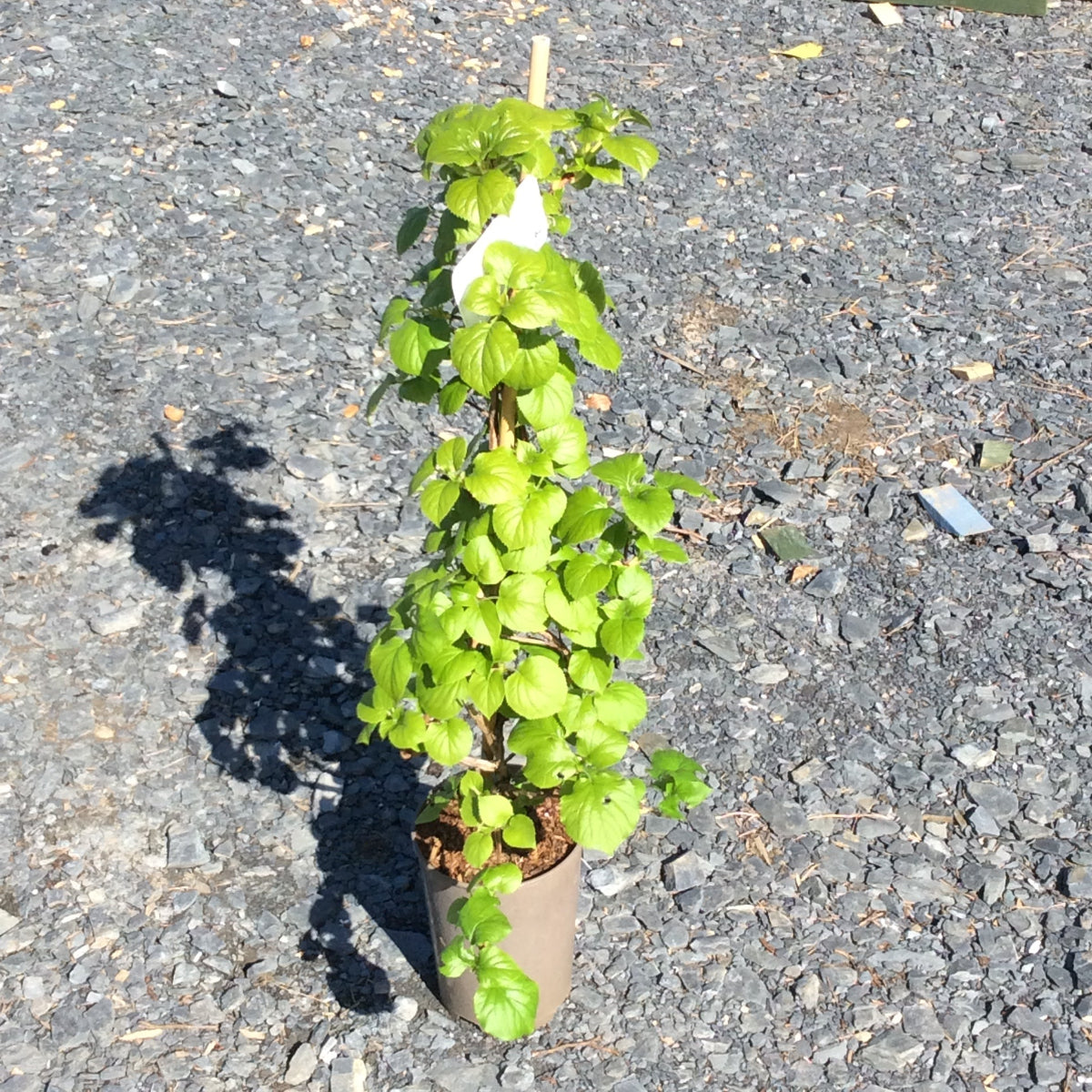
Supplied in a 3 litre pot. Grown and dispatched from Stoneybrook Nursery. All plants are carefully packaged to arrive in excellent condition, ready to plant.
Low stock: 6 left
More details.
Planting Instructions
Plant Climbing Hydrangea (Hydrangea petiolaris) in moist, well-drained, humus-rich soil in partial shade or shade, ideally against a north- or east-facing wall. Avoid hot, dry positions and plant clear of the driest ground immediately beside the wall. Water the pot thoroughly before planting and set the root ball at its existing soil level. Backfill, firm gently and water well. Provide initial support to guide young shoots towards a sound surface; established stems cling using aerial roots. Water regularly during establishment and dry spells, and mulch in spring without covering the stems. Allow time for establishment before expecting vigorous growth. Prune lightly after flowering to control wayward shoots, removing dead or damaged growth as needed.
Size & Specification
Climbing Hydrangea (Hydrangea petiolaris), a deciduous, self-clinging climber with white lacecap flowerheads in early summer. The listing specifies a 3-litre pot and offers size options labelled ‘3 litre pot’ and ‘Twin buy’; select the required option when ordering. Supplied height is not specified. The existing description gives an eventual height of approximately 10–15m on a suitable supporting surface over many years. Plants can be slow to establish and may arrive without leaves during dormancy. Flowering on arrival is not guaranteed.
Delivery & Dispatch
The listing specifies pot-grown plants in 3-litre containers; check your selected option, including ‘Twin buy’, before ordering. Check delivery information and available options at checkout, and contact Stoneybrook Nursery before ordering if delivery timing is important. Unpack promptly on arrival, check the compost and water if needed. Keep outdoors in a sheltered position until planting and prevent the root ball from drying out or standing in water. This deciduous climber may arrive dormant without leaves or flowers, depending on the season.
Wildlife & Ecological Notes
The small fertile flowers within the white lacecap flowerheads can provide food for visiting pollinating insects. Established climbing growth can offer seasonal shelter and cover for birds and other garden wildlife. Check for active bird nests before pruning and leave occupied sections undisturbed. Combine with plants flowering at other times of year to extend the garden’s food supply for insects.