

Larix kaempferi Niwaki | Japanese Larch Cloud Tree
Larix kaempferi Niwaki | Japanese Larch Cloud Tree
Larix kaempferi Niwaki – Japanese Larch Cloud Tree
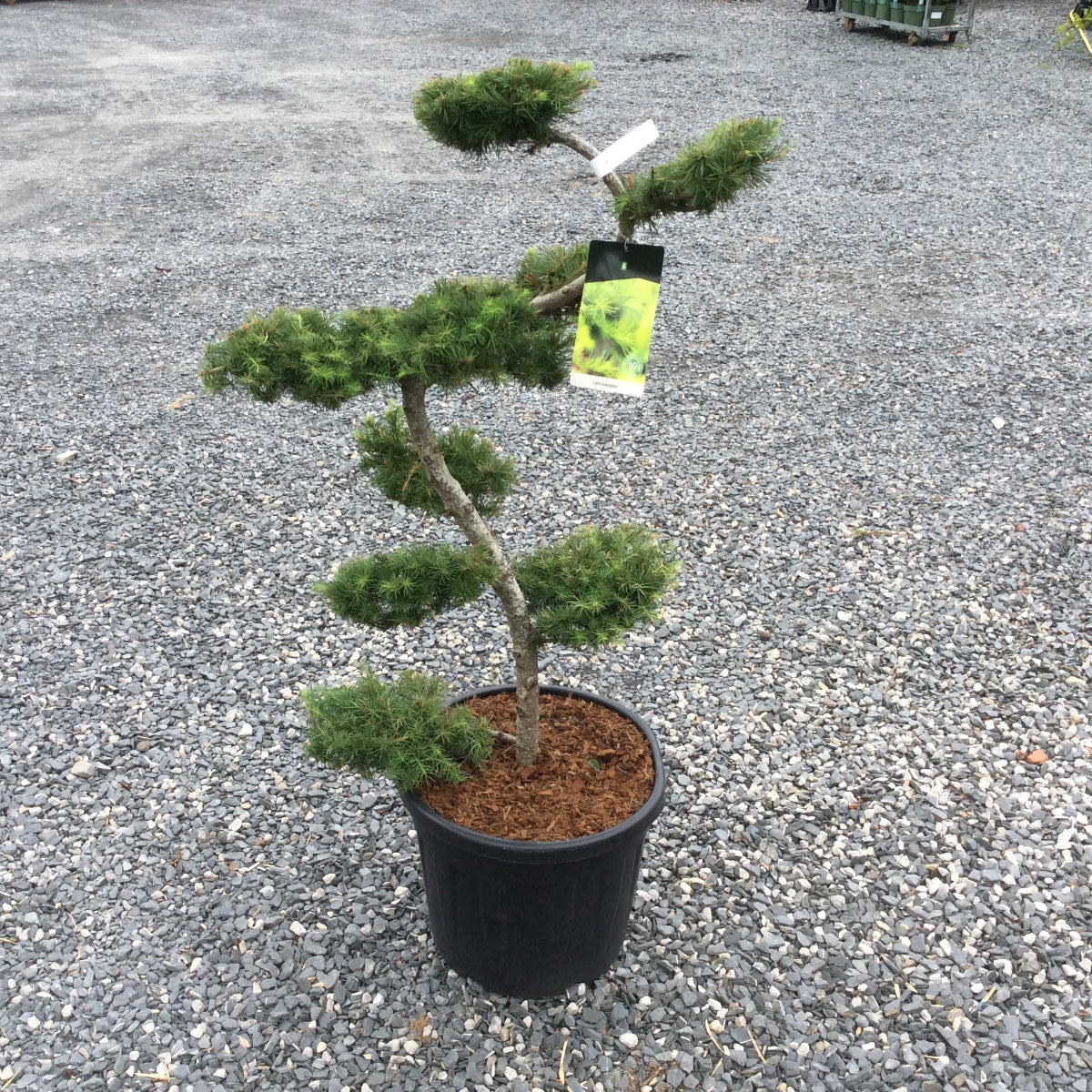
A truly exceptional specimen — Larix kaempferi trained in the Japanese Niwaki tradition. With its sinuous, characterful stem and carefully cloud-pruned canopy layers, this is a living sculpture that brings the meditative aesthetic of Japanese garden design to any outdoor space. Unlike most Niwaki subjects, Japanese larch is deciduous, offering a dramatic seasonal transformation: soft, bright green needles in spring and summer, warm amber and gold in autumn, and an architectural bare silhouette through winter.
What Makes This Specimen Special
- Trained in the authentic Niwaki style — sinuous stem with layered, cloud-pruned canopy
- Deciduous conifer with four distinct seasonal displays
- Soft needle foliage in spring and summer; rich amber autumn colour
- Striking bare winter silhouette — architectural interest year-round
- Each plant is a unique, individually shaped specimen
Growing Guidance
Japanese larch thrives in full sun and is tolerant of most well-drained soils, including acidic and sandy ground. Hardy throughout the UK. Best positioned where the sinuous stem and canopy layers can be appreciated — as a focal point in a gravel garden, on a terrace, or as a standalone specimen in a lawn or border. Light cloud pruning in late summer maintains the layered form.
About Niwaki
Niwaki (庭木) is the Japanese art of training trees and shrubs to reflect the beauty of trees found in nature — shaped by wind, age, and environment. Each Niwaki specimen is the result of years of patient training and is a genuine horticultural artwork.
Supplied By Stoneybrook Nursery
Individually trained UK-grown specimens, dispatched with care in robust protective packaging. A rare and distinguished addition to any serious garden collection.
Couldn't load pickup availability
Low stock: 2 left

More details.
Planting Instructions
Plant in full sun in well-drained soil. Larix kaempferi is tolerant of most soil types including acidic and sandy ground. Position where the sinuous stem and layered canopy can be fully appreciated — as a focal point in a gravel garden, on a terrace, or as a standalone specimen in a lawn or border. Avoid waterlogged conditions.
Water regularly during the first growing season to establish. Once established, Japanese larch is hardy and largely self-sufficient. Carry out light cloud pruning in late summer to maintain the layered Niwaki form — remove any shoots that disrupt the canopy layers, working carefully to preserve the overall silhouette.
Size & Specification
Supplied as a unique, individually trained Niwaki specimen with a sinuous stem and layered, cloud-pruned canopy. Each plant is a one-of-a-kind horticultural artwork, the result of years of patient training. Supplied in a nursery pot.
Eventual height: variable depending on training and pruning. Japanese larch can reach 20m+ if left unclipped, but Niwaki specimens are maintained at a garden-appropriate scale through regular pruning. Fully hardy throughout the UK.
Delivery & Dispatch
Dispatched in its nursery pot, carefully packaged to protect the trained form during transit. Due to the unique and delicate nature of Niwaki specimens, we take particular care in packaging to ensure safe arrival. We dispatch Monday to Wednesday to avoid weekend delays.
Delivered via a specialist plant courier. You will receive a dispatch notification with tracking details. Please ensure someone is available to receive the delivery, as the plant should not be left in packaging for extended periods. Larger specimens may require pallet delivery — we will confirm at the time of dispatch.
Wildlife & Ecological Notes
Larix kaempferi is a valuable wildlife tree. Its deciduous canopy provides seasonal nesting and roosting habitat for birds, while the open winter silhouette allows light to reach the ground, benefiting understorey plants and invertebrates.
The small cones provide a food source for crossbills, siskins, and other seed-eating birds. As a long-lived specimen, it contributes lasting structural and ecological value to the garden over many decades.