

Sweet Gum (Liquidambar styraciflua) Quarter Standard
Sweet Gum (Liquidambar styraciflua) Quarter Standard
Sweet Gum (Liquidambar styraciflua) – Quarter Standard
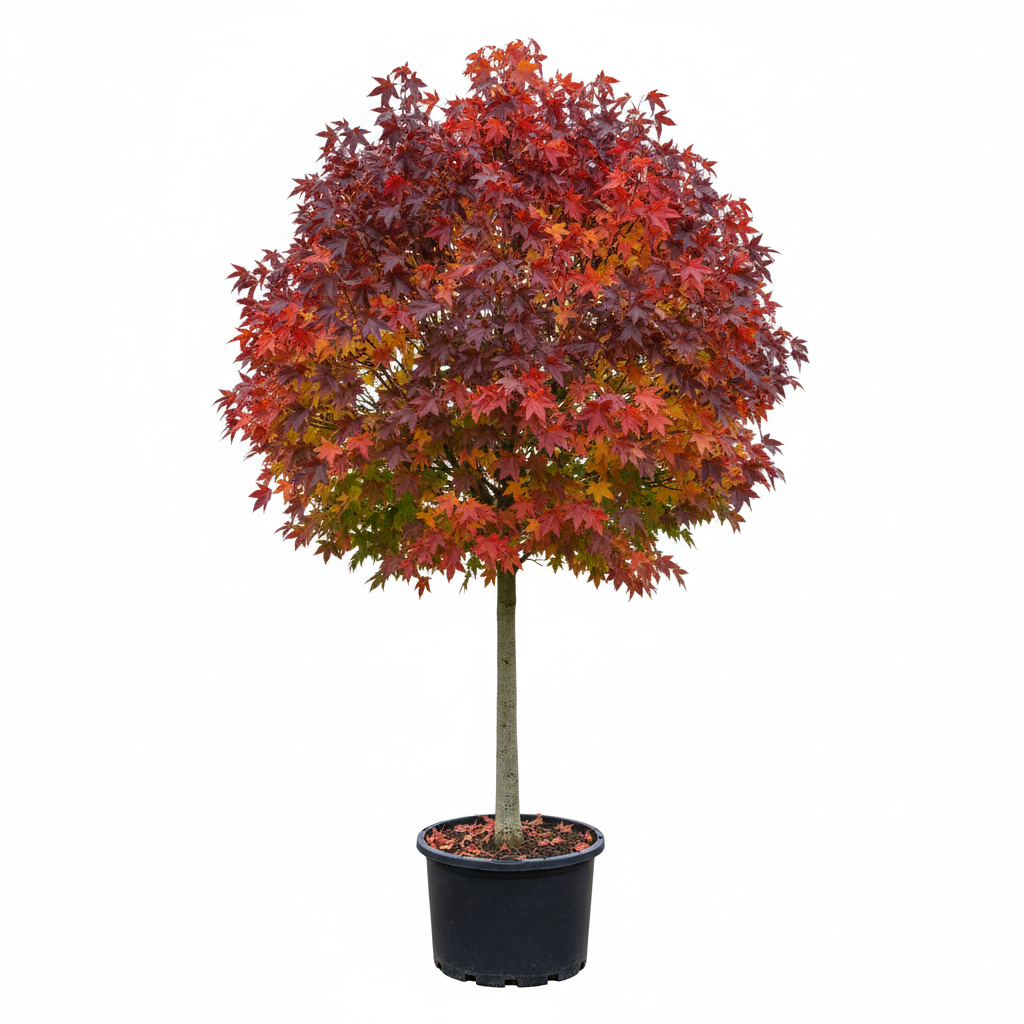
Enjoy the changing seasons with this quarter-standard Sweet Gum. A short, clear trunk supports a balanced crown of star-shaped leaves, green through spring and summer before turning shades of amber, orange and crimson in autumn. Colour varies naturally with the season and growing conditions.
Supplied in an 18–20 litre pot, this trained specimen adds structure to a lawn or spacious mixed border. Position it where the autumn display can be enjoyed from a window or garden seating area. Its quarter-standard form describes the way it is trained, not a dwarf growth habit: Sweet Gum naturally becomes a large tree and needs room to develop.
Key Features
- Distinctive star-shaped foliage with rich autumn colour.
- Quarter-standard form with a short, clear trunk and balanced crown.
- Supplied in an 18–20 litre pot.
- Deciduous foliage with seasonal interest.
Planting and Care
Choose a sunny position sheltered from strong winds, with fertile, moist but well-drained soil, preferably acid to neutral. Avoid shallow, strongly chalky ground. Water regularly during establishment and prolonged dry spells. Mulch around the root zone while keeping the trunk clear. Keep pruning light, removing damaged or crossing branches when dormant.
Size and Garden Space
Supplied as a quarter-standard tree in an 18–20 litre pot. Overall height, clear-stem height, head width and trunk girth are not specified; please contact us for current stock measurements if precise dimensions are important. Sweet Gum can eventually reach around 20 metres in suitable conditions, so allow generous space for its mature canopy and roots. It may arrive without leaves during dormancy.
Couldn't load pickup availability
Out of stock

More details.
Planting Instructions
Plant quarter-standard Sweet Gum (Liquidambar styraciflua) in full sun in a position sheltered from strong winds. Choose fertile, moist but well-drained soil, preferably acid to neutral, and avoid shallow, strongly chalky ground. Allow generous room for a large mature tree. Water the pot thoroughly, remove the container and set the rootball at its existing soil level. Backfill, firm gently and water well.
Stake if needed and check ties regularly. Water during establishment and prolonged dry spells, and mulch the root zone without covering the trunk. Keep pruning light, removing damaged or crossing branches when dormant. Check for active bird nests before pruning. The quarter-standard form is not a dwarf growth habit.
Size & Specification
Sweet Gum (Liquidambar styraciflua), supplied as a quarter-standard tree in an 18–20 litre pot, with a short, clear trunk and balanced crown. Overall height, clear-stem height, head width and trunk girth are not specified for this listing. Please confirm current stock measurements before ordering if precise dimensions or matching specimens are required.
Individual plants vary naturally in shape and branching. This deciduous tree may arrive without leaves during dormancy, and autumn colour varies with weather and growing conditions. Sweet Gum can eventually reach around 20 metres in suitable conditions; the trained quarter-standard form does not mean the tree will remain naturally compact.
Delivery & Dispatch
Supplied pot-grown in an 18–20 litre container. Please refer to our delivery information for current delivery areas, charges and dispatch arrangements. Contact Stoneybrook Nursery before ordering if access is restricted or you need delivery by a particular date.
Unpack carefully on arrival, check the compost moisture and water if needed. Keep outdoors in a sheltered position until planting and prevent the rootball from drying out. Lift by the container or rootball rather than the trunk or branches. As a deciduous tree, Sweet Gum may arrive without leaves outside the growing season.
Wildlife & Ecological Notes
As the canopy develops, Sweet Gum can provide seasonal shelter and cover for birds and invertebrates. It is wind-pollinated rather than a nectar-rich flowering tree. Combine with flowering plants and native species to provide a wider range of wildlife habitats and food sources.
Inspect carefully for active bird nests before pruning and leave occupied branches undisturbed. Fallen leaves can be composted or allowed to break down in suitable border areas.
- 5 stars: 1 (100%)
- 4 stars: 0 (0%)
- 3 stars: 0 (0%)
- 2 stars: 0 (0%)
- 1 star: 0 (0%)
Great product, great packaging and even better customer service