
Merryweather Damson (Prunus insititia) Bare-Root Tree 4–5 ft
Merryweather Damson (Prunus insititia) Bare-Root Tree 4–5 ft
Merryweather Damson (Prunus insititia) Bare-Root Tree
Grow your own traditional Merryweather damsons with this dependable, self-fertile fruit tree. It produces fragrant spring blossom followed by heavy crops of deep blue-purple damsons with a rich, sweet-sharp flavour, ideal for pies, jams, chutneys and preserves.
Why grow a Merryweather Damson?
- Self-fertile, so it can fruit without another damson nearby
- Richly flavoured fruit for cooking, preserving and eating when fully ripe
- Attractive spring blossom and a reliable summer crop
- Supplied bare-root at approximately 4–5 ft (120–150 cm)
Bare-root delivery
Bare-root trees are lifted while dormant and dispatched without a pot or compost. Plant promptly after delivery for the best start.
Couldn't load pickup availability
In stock
View full details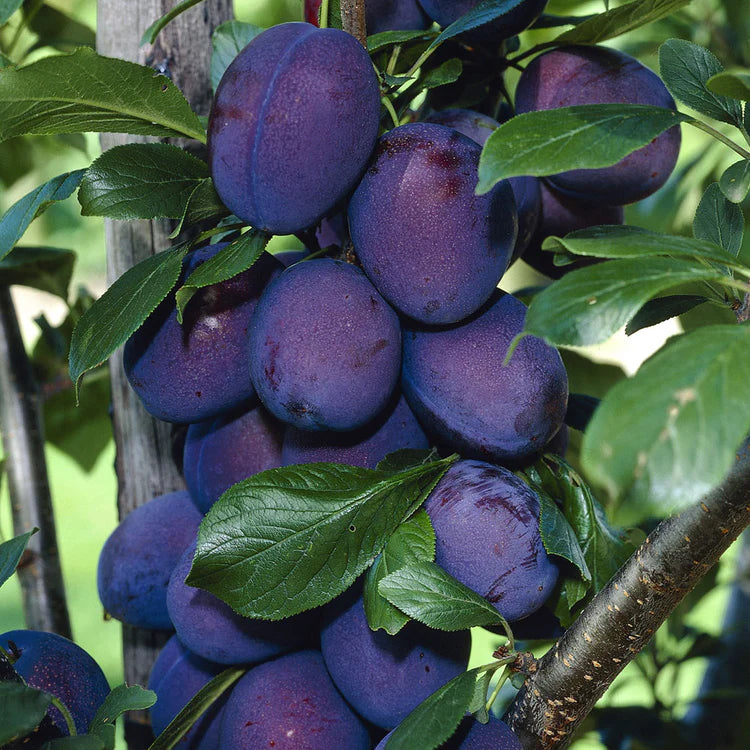
Collapsible content
Planting Instructions
Plant your Merryweather Damson in a sunny or lightly shaded position with fertile, well-drained soil. Soak the roots before planting, spread them out in the planting hole, backfill firmly and water well. Keep the tree watered during its first growing season and mulch around the base without covering the stem.
Size & Specification
Supplied as a bare-root Merryweather Damson (Prunus insititia) tree approximately 4–5 ft (120–150 cm) tall. Bare-root trees are supplied dormant without a pot or compost, so the overall appearance on arrival will differ from a container-grown plant.
Delivery & Dispatch
Bare-root trees are lifted and dispatched during the dormant season. On arrival, unwrap the roots, soak them if needed and plant as soon as possible. If planting must wait, keep the roots cool, shaded and damp, but not standing in water.
Wildlife & Ecological Notes
The spring blossom provides nectar and pollen for visiting pollinators. The tree adds seasonal habitat and produces damsons that can be enjoyed by people and garden wildlife.