

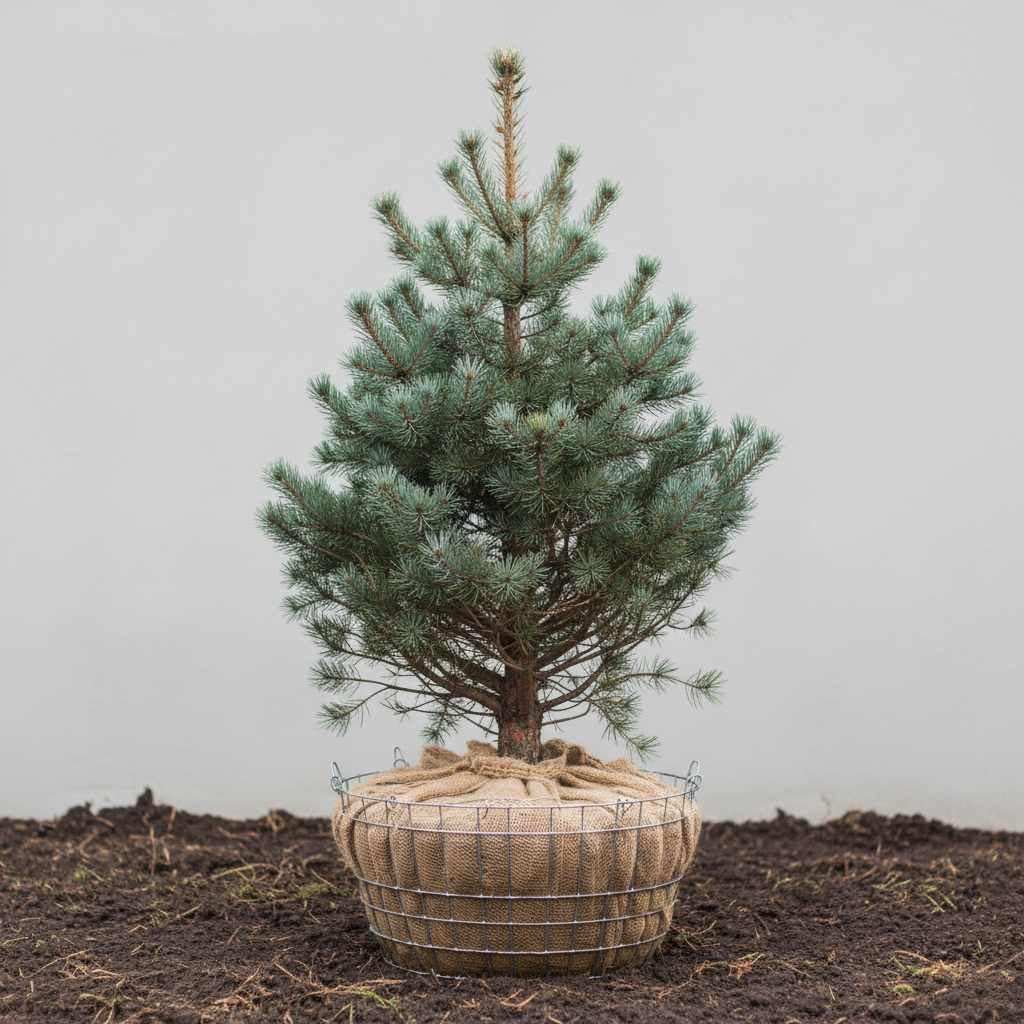
Pinus sylvestris, Scots Pine wire rootball 125-150cm
Pinus sylvestris, Scots Pine wire rootball 125-150cm
Pinus sylvestris – Scots Pine Wire Rootball
Pinus sylvestris (Scots Pine) is Britain's only native pine, and few trees bring the same wild, windswept character to a garden. Blue-green needles catch the light all year, while the upper trunk and branches develop that unmistakable warm orange-red bark which glows in low winter sun.
Supplied as a wire rootball specimen at 125-150cm, this is a substantial, field-grown tree with an established root system, ready to settle in and start making a statement from its first season.
Key Features
- Striking orange-red bark on the upper trunk and branches
- Blue-green evergreen needles for year-round colour and structure
- Britain's only native pine, perfectly suited to UK conditions
- Field-grown wire rootball for strong, reliable establishment
- Exceptional wildlife and biodiversity value
Why Choose Scots Pine?
- Thrives on poor, sandy and free-draining soils where many trees struggle
- Outstanding tolerance of wind, exposure and coastal conditions
- Naturalistic, sculptural form that improves with age
- Superb as a specimen, windbreak or part of a native planting scheme
- Virtually maintenance free once established
Growing Conditions
Best in full sun on well-drained sandy or loamy soil. Avoid heavy clay and waterlogged ground. Exceptionally hardy and happy in exposed, windy sites. Mature height typically 15 to 25m over 30 to 50 years with a spread of 6 to 10m, developing a characteristic flat-topped crown with age.
Garden Design & Uses
Ideal as a sculptural specimen tree, in naturalistic and woodland planting, as a windbreak on exposed ground, or as the backbone of a native wildlife garden.
Pre-order: reserve your plants now for seasonal dispatch. Please check Delivery & Dispatch below for expected timing before ordering.
Couldn't load pickup availability
Low stock: 2 left
View full details
More details
Planting Instructions
Wire rootball Scots Pine is best planted during the dormant season, between October and March. Choose a position in full sun on free-draining sandy or loamy soil, avoiding heavy clay and waterlogged ground.
Dig a hole twice the width of the rootball and to the same depth, so the top of the rootball sits level with the surrounding soil. Leave the wire basket and hessian in place when planting; both are designed to break down naturally and removing them risks collapsing the rootball. Simply cut away and fold down any wire or hessian sitting above soil level, and remove all ties from around the trunk.
Backfill with excavated soil mixed with organic matter, firm well in layers and water thoroughly. Stake securely, as large conifers are prone to wind rock while establishing. Mulch 5 to 8cm deep around the base, keeping it clear of the trunk, and water regularly through the first two growing seasons. No routine pruning is needed.
Size & Specification
Supplied as a field-grown wire rootball specimen at 125-150cm in height. The rootball is wrapped in hessian and secured within a wire basket, which protects the root system in transit and during planting.
Mature height 15 to 25m over 30 to 50 years, with a spread of 6 to 10m and a characteristic flat-topped crown in maturity. Fully hardy throughout the UK (RHS H7) and tolerant of exposed and coastal sites.
Delivery & Dispatch
Wire rootball specimens are heavy and are dispatched on a specialist pallet delivery service. Delivery is to kerbside, so please ensure suitable access for a pallet vehicle and help available to move the tree into position.
Typically dispatched within 5 to 10 working days of ordering, subject to availability. You will receive tracking information once your order has been collected. Delivery is to mainland UK addresses only.
Rootball trees are lifted and despatched during the dormant season (October to March). Orders placed outside this window will be fulfilled at the start of the next planting season.
Wildlife & Ecological Notes
Scots Pine is one of the most ecologically valuable conifers you can plant in the UK, supporting well over 170 species of invertebrate associated with native pine woodland.
The dense evergreen canopy offers year-round nesting and roosting cover for goldcrest, coal tit and crossbill, while the cones feed crossbills, siskins and, in suitable areas, red squirrels.
It also forms mycorrhizal partnerships with native fungi, enriching soil life and supporting wider woodland biodiversity. A genuine long-term investment for native and wildlife planting schemes.