
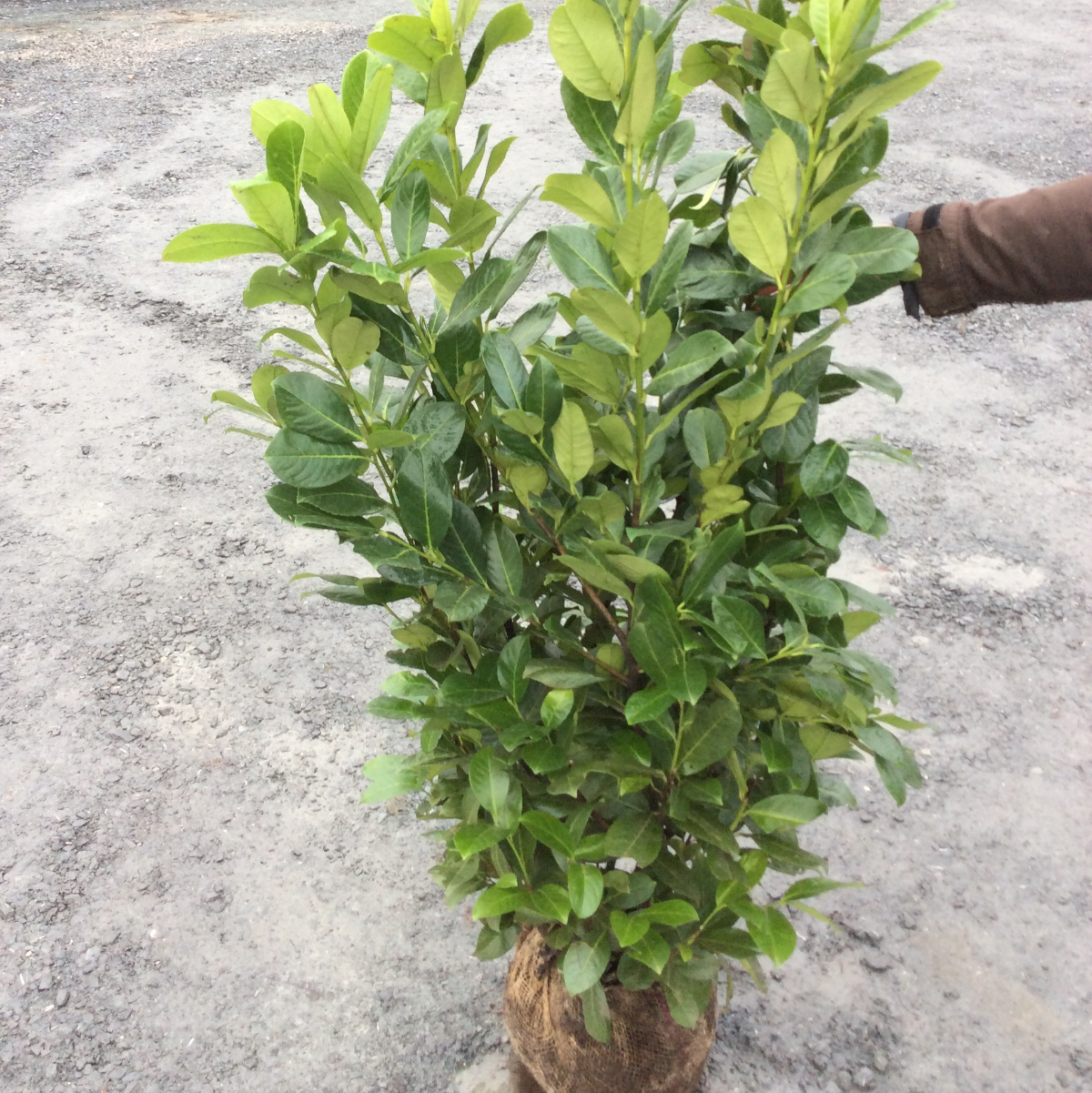
Prunus laurocerasus Cherry Laurel rootball , 1.5-1.75m
Prunus laurocerasus Cherry Laurel rootball , 1.5-1.75m
Couldn't load pickup availability
Create a greener, more private garden with Cherry Laurel (Prunus laurocerasus), a broad-leaved evergreen valued for its dense growth and glossy green foliage. Supplied as a rootball plant at 1.5–1.75m tall, this size is a useful starting point for a substantial hedge or boundary screen.
Evergreen hedging for year-round privacy
Cherry Laurel keeps its foliage through the seasons, helping soften fences, frame garden boundaries and screen neighbouring views. Its broad leaves create a bold, leafy backdrop for borders, while regular trimming encourages a closely knit hedge. Planted in a row, it can turn an exposed boundary into a more enclosed, sheltered-feeling part of the garden.
Why choose Cherry Laurel rootballs?
- Year-round foliage: evergreen leaves provide continuing garden structure.
- Dense growth: well suited to privacy hedges and boundary screening.
- Supplied height: 1.5–1.75m, offering a taller starting point than smaller hedging stock.
- Versatile positioning: grows in sun or partial shade, with tolerance of shadier positions.
- Manageable shape: responds well to trimming, although it can become a large shrub if left unpruned.
Planting and establishment
Choose a position with well-drained soil and enough room for the hedge to develop. Avoid waterlogged ground. Rootball plants are lifted with soil around their roots; keep the rootball moist and protected before planting, and plant promptly when ground conditions are suitable.
Prepare the planting area thoroughly, set each plant at its previous soil level and water well after planting. Continue watering during dry spells while the roots establish, including dry periods in winter. Apply mulch around the base, keeping it away from the stems. Hedge spacing depends on the width of the supplied plants and how quickly you want the hedge to close.
Trimming and garden suitability
Trim to maintain your chosen height and width. Secateurs give a neater finish on the large leaves than cutting straight through them with hedge trimmers. Check for nesting birds before pruning. Cherry Laurel is harmful if eaten, so position it thoughtfully where children, pets or livestock could access it.
Supplied: Cherry Laurel (Prunus laurocerasus), rootball, 1.5–1.75m tall. This is rootball stock, not a pot-grown plant.
Low stock: 10 left
More details.
Planting Instructions
Plant Cherry Laurel (Prunus laurocerasus) in sun or partial shade in moist but well-drained soil. Avoid waterlogged ground and planting when the soil is frozen. Keep the rootball moist and protected before planting.
Prepare a hole wider than the rootball and no deeper than its height. Position at the original soil level, backfill gently and water thoroughly. Do not break up the rootball. Remove synthetic wrapping before planting; check the nursery's instructions before handling natural hessian or wire baskets.
Water regularly during dry spells while establishing, checking that moisture reaches the rootball. Mulch around the base without covering the stems. Choose spacing to suit the plants' width and desired hedge density. Trim to encourage bushy growth, checking for nesting birds first.
Size & Specification
Cherry Laurel (Prunus laurocerasus), supplied as rootball stock at a listed height of 1.5–1.75m. This is not a pot-grown plant. Rootball diameter and plant width are not specified.
An evergreen, broad-leaved shrub suitable for hedging and privacy screening. Supplied height is not the mature height; untrimmed plants can develop into large shrubs. Maintain the desired height and width through regular pruning. Plant shape and dimensions vary naturally.
Delivery & Dispatch
This listing is for Cherry Laurel (Prunus laurocerasus) supplied as rootball stock. Lifting and dispatch depend on seasonal availability, weather and suitable ground conditions. No specific dispatch date is confirmed in this listing.
On arrival, check the rootball is moist and protect it from drying winds and frost. Plant promptly when ground conditions allow. If planting is delayed, keep the rootball sheltered and moist without leaving it standing in water.
Wildlife & Ecological Notes
The dense evergreen foliage of Cherry Laurel (Prunus laurocerasus) can provide shelter and nesting cover for garden birds. Flowers, when allowed to develop, attract pollinating insects; frequent clipping may reduce flowering. Check for active nests before trimming.
Cherry Laurel is non-native in Britain and can spread by seed into nearby habitats. Avoid planting beside sensitive woodland and manage unwanted seedlings. For a native wildlife hedge, consider a mixed native planting instead. The plant is harmful if eaten; keep foliage and prunings away from children, pets and livestock.