


Viburnum Tinus Specimen Cube | 1m x 1m Topiary
Viburnum Tinus Specimen Cube | 1m x 1m Topiary
Couldn't load pickup availability
Free delivery included.
Architectural Evergreen Topiary — Ready to Impress
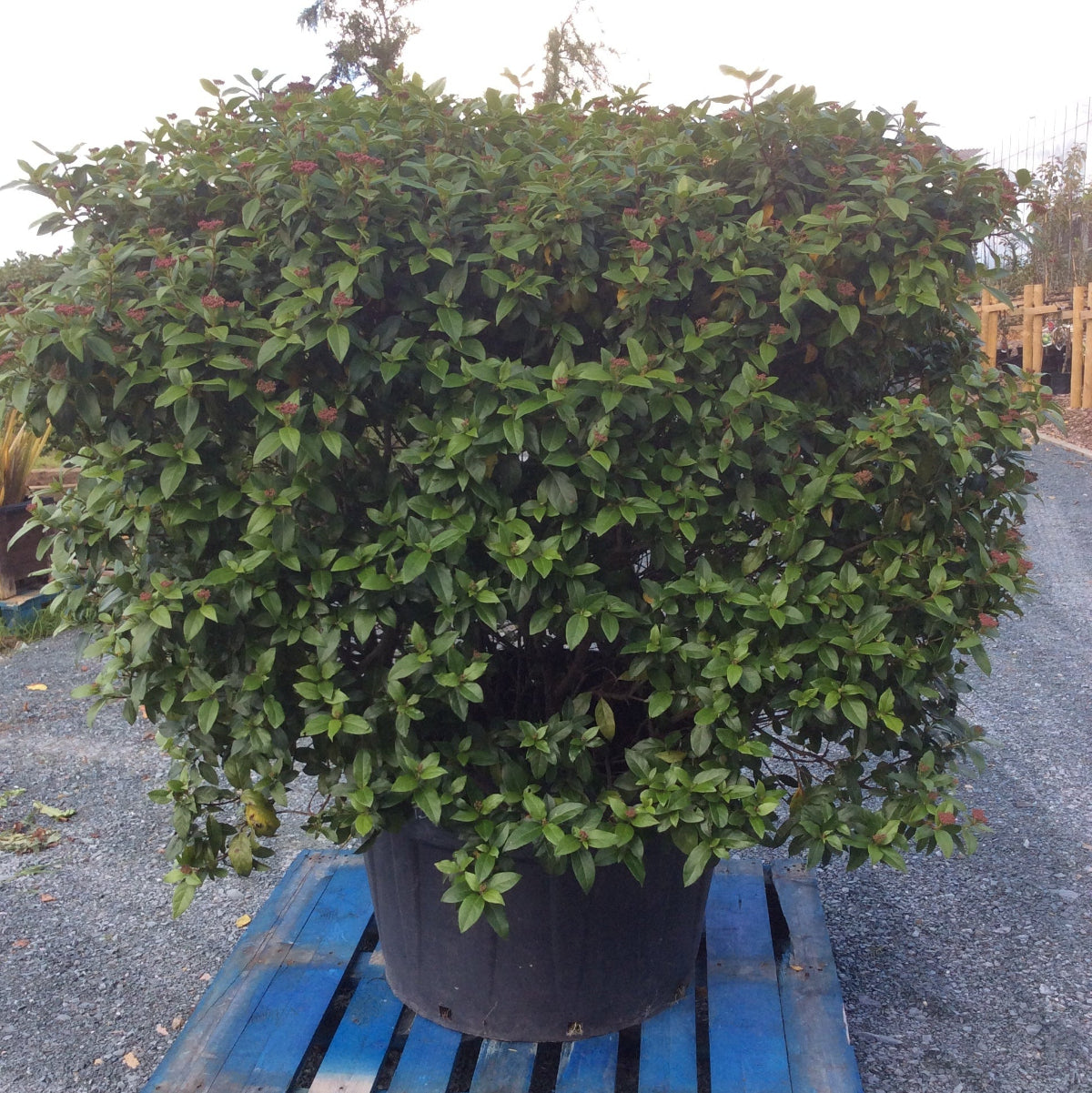
This large, fully-formed Laurustinus (Viburnum tinus) specimen cube arrives at approximately 1 metre × 1 metre — a statement piece that brings instant structure and year-round presence to any garden scheme.
Why Choose This Specimen?
- Evergreen structure — dense, dark foliage holds its cube form beautifully through every season
- Mature & ready — a trained specimen for immediate impact
- Versatile placement — ideal as a formal focal point, flanking an entrance, or anchoring a large border
- Maintaining its shape — trim after flowering, with a light summer tidy if needed, to preserve its geometric silhouette
- Wildlife value — flowers can support pollinators and berries may be taken by birds when allowed to develop; regular clipping can reduce both
Imagine It In Your Garden
Picture a pair of these cubes framing a garden gate, or a single specimen commanding the centre of a gravel courtyard. A mature evergreen topiary gives a garden a lasting focal point through the seasons.
Specification
- Form: Cube
- Size: Approx. 1m × 1m
- Type: Evergreen shrub
- Foliage: Dark green, year-round
- Flowers: White clusters, winter–spring, if not removed by clipping
- Listed weight: 60 kg (including pot/rootball)
Low stock: 2 left


More details.
Planting Instructions
Plant Laurustinus (Viburnum tinus) in sun or partial shade in moist but well-drained soil. Choose a position sheltered from cold, drying winds. Water the rootball thoroughly before planting.
Dig a hole wider than the rootball and plant at the same depth as in its nursery container. Backfill, firm gently and water well. Add a mulch around the base, keeping it clear of the stems. Water regularly during the first growing season, especially in dry weather, without leaving the roots waterlogged.
Trim after flowering to retain the cube shape; a light summer tidy can be made if needed. Heavy or frequent clipping will reduce flowering and berry production. For container growing, use a generous pot with drainage holes and monitor watering closely.
Size & Specification
Laurustinus (Viburnum tinus), supplied as a mature, trained evergreen topiary cube. Listed specimen dimensions are approximately 1m × 1m; these are approximate plant dimensions, not a guarantee of total height including the container.
The listing gives a weight of approximately 60 kg including the pot/rootball. Allow for safe handling and suitable access when planning its position. Plants are living specimens, so natural variations in shape and dimensions should be expected.
Dense dark-green foliage provides year-round structure. White flowers can appear from winter into spring where growth has been allowed to flower. Maintain the supplied cube form by regular, light trimming.
Delivery & Dispatch
This is a large, heavy specimen, listed at approximately 60 kg including its pot/rootball. Plan suitable access and arrange appropriate help or handling equipment to move it safely to its planting position.
Refer to the current delivery information and your order confirmation for delivery charges, arrangements and dispatch timing. If access is restricted by narrow gates, steps or a gravel driveway, contact Stoneybrook Nursery to discuss suitability before ordering.
On arrival, check the rootball moisture and water if needed. Keep the plant upright in a sheltered position until planting, and do not allow the rootball to dry out.
Wildlife & Ecological Notes
Laurustinus (Viburnum tinus) provides evergreen cover for garden wildlife. Its winter and spring flowers can offer food for pollinating insects during mild weather, and the berries may be taken by birds.
A tightly clipped topiary may produce fewer flowers and berries than an unclipped shrub. Where possible, trim after flowering and retain some flowering growth. Check for active bird nests before clipping and leave occupied areas undisturbed. The berries are not intended for human consumption.