
Wisteria Umbrella Standard - Chinese Wisteria Tree
Wisteria Umbrella Standard - Chinese Wisteria Tree
Wisteria Umbrella - Wisteria Sinensis
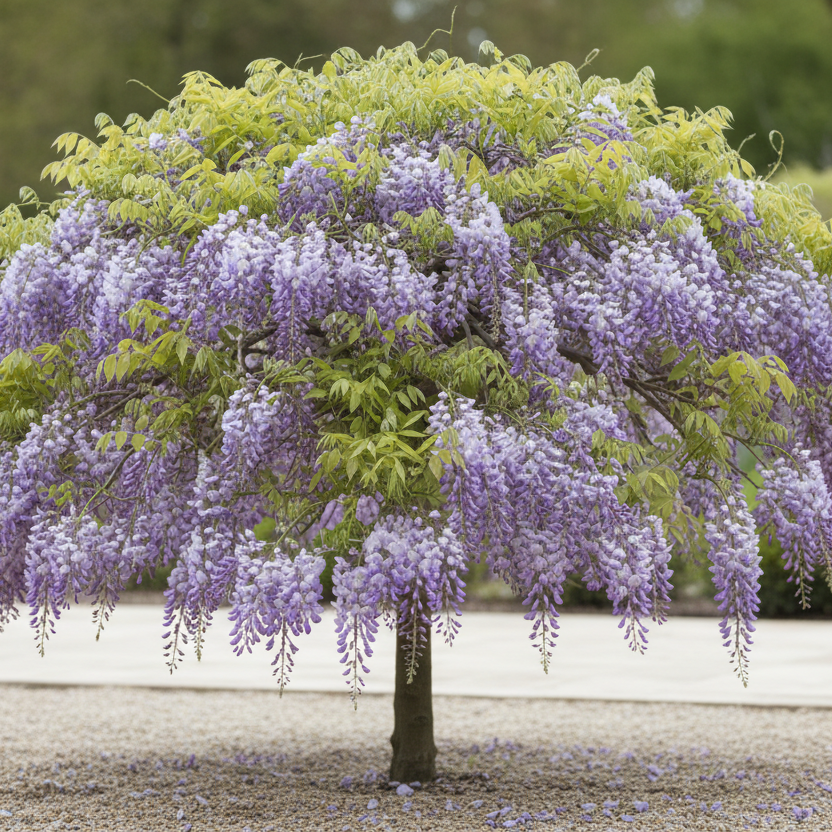
Create a stunning focal point with a Wisteria Umbrella standard. This beautifully trained specimen features cascading racemes of fragrant flowers atop a clear stem, creating an elegant umbrella-shaped canopy. Chinese Wisteria (Wisteria sinensis) is renowned for its spectacular display of fragrant, lilac-blue flowers in late spring, making it one of the most romantic and eye-catching plants for UK gardens.
Key Features
- Spectacular Flowers: Long, cascading racemes of fragrant lilac-blue flowers in late spring
- Heavenly Fragrance: Sweet, intoxicating scent fills the air during flowering
- Umbrella Form: Trained into an elegant umbrella shape on a clear stem
- Architectural Impact: Creates a stunning focal point and conversation piece
- Hardy: Tolerates temperatures down to -20°C once established
- Long-Lived: Becomes more beautiful and flowers more profusely with age
- Wildlife Friendly: Flowers attract bees and other pollinators
Growing Information
Overall Height: Approximately 2-2.5m (including umbrella canopy)
Canopy Spread: 1-1.5m
Growth Rate: Moderate to fast
Position: Full sun for best flowering
Soil: Moist, well-drained, fertile soil
Hardiness: Fully hardy (H5) - tolerates temperatures to -20°C
Planting & Care
Plant in spring or autumn in moist, well-drained, fertile soil enriched with organic matter. Position in full sun for the most abundant flowering - wisterias need at least 6 hours of direct sunlight daily. Water regularly during the first two growing seasons to establish roots. Feed with a high-potassium fertiliser (such as tomato feed) in spring and early summer to encourage flowering. Prune twice a year to maintain the umbrella shape: in late summer, cut back the whippy green shoots to 5-6 leaves, and in late winter, reduce these same shoots to 2-3 buds. This pruning regime encourages maximum flower production. Mulch around the base to retain moisture.
Perfect For
- Creating stunning focal points in gardens
- Patios and terraces as a specimen feature
- Formal and contemporary garden designs
- Adding height and structure to borders
- Fragrant garden features
- Large containers (with regular feeding and watering)
- Romantic and cottage garden styles
Why Choose Wisteria Umbrella?
Wisteria umbrella standards are among the most spectacular flowering trees available. The cascading racemes of fragrant flowers create a breathtaking display in late spring, while the trained umbrella form provides year-round architectural interest. This is a long-lived plant that becomes more beautiful with age, flowering more profusely each year once fully established.
Available at Stoneybrook Nursery, Lancashire - Quality trained wisteria and specimen plants for UK gardens.
Couldn't load pickup availability
Low stock: 1 left
More details.
Planting Instructions
Plant in spring or autumn in moist, well-drained, fertile soil enriched with organic matter. Position in full sun — wisterias need at least 6 hours of direct sunlight daily for the most abundant flowering. Water regularly during the first two growing seasons. Feed with a high-potassium fertiliser (such as tomato feed) in spring and early summer. Prune twice a year: in late summer cut back new shoots to 5–6 leaves; in late winter reduce to 2–3 buds. Mulch around the base to retain moisture.
Size & Specification
Supplied as a trained umbrella standard. Overall height approximately 2–2.5m including canopy. Canopy spread 1–1.5m. Moderate to fast growth rate. Fully hardy (H5) — tolerates temperatures to -20°C once established.
Delivery & Dispatch
Supplied as a large pot-grown trained specimen. Due to size and weight (approx. 80kg), delivery is by pallet only. Please ensure suitable access for pallet delivery. Dispatched within 5–7 working days. Contact us if you have any delivery access queries.
Wildlife & Ecological Notes
The fragrant lilac-blue flowers are highly attractive to bees and other pollinators, providing a valuable nectar source in late spring. An excellent choice for wildlife-friendly gardens and pollinator planting schemes.