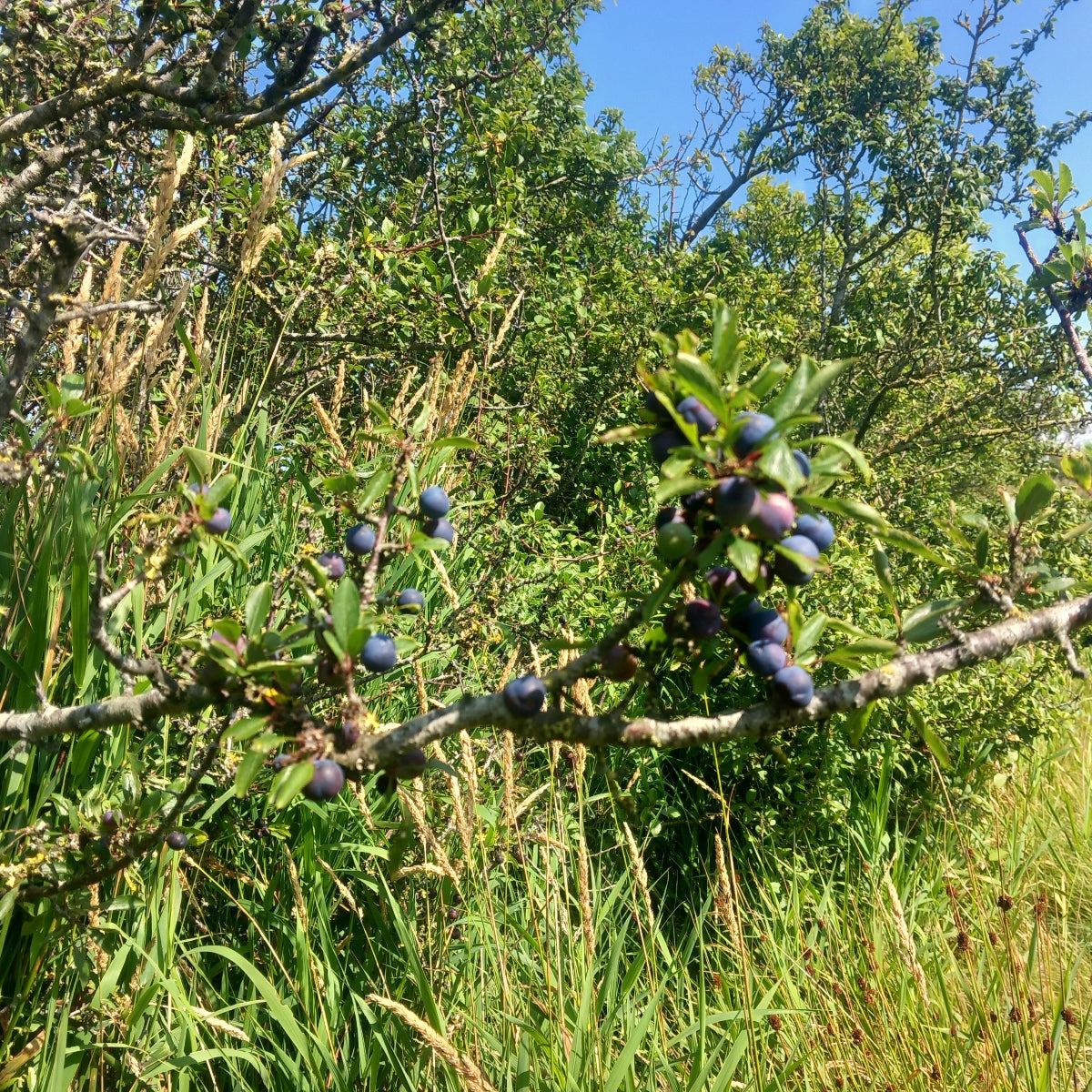
Blackthorn Bareroot Hedging 40-60cm x 25
⚠️ PRE-ORDER — Limited stock available. Secure your order now. Due to drought conditions during the growing season, availability is restricted this year.
Blackthorn Bareroot Hedging 40–60cm — Pack of 25
Prunus spinosa is a stunning native British hedging plant prized for its dense thorny structure, early spring blossom, and outstanding wildlife value. Supplied as bare root plants in bundles of 25 at 40–60cm tall. Available from mid-November to April during the optimal bare root planting season.
Why Choose Blackthorn?
Blackthorn creates an impenetrable native hedge with sharp thorns ideal for security and boundary planting. In early spring, the bare stems are covered in masses of small white flowers that provide vital early nectar and pollen for bees and other pollinators. By autumn, the hedge produces dark purple sloe berries loved by birds and perfect for sloe gin. As a native species, it supports hundreds of wildlife species including moth and butterfly caterpillars.
Key Features
- Native British species — exceptional wildlife value
- Dense thorny structure provides security and nesting sites
- Early spring white blossom for pollinators
- Dark purple sloe berries in autumn
- Supports moths, butterflies, birds, and mammals
- Hardy and adaptable to most UK soils
- Perfect for traditional hedgerows and boundaries
Planting & Care
Plant 3–5 per metre for hedging. Thrives in most soils and full sun to partial shade. Trim after flowering to maintain shape. Note: Blackthorn can produce suckers — remove these unless you want a dense thicket.
Supplied As
25 bare root plants at 40–60cm tall, carefully lifted and packed for optimal establishment. Bare root delivery is our most sustainable option — lighter packaging, lower carbon footprint, and root systems that establish faster than pot-grown alternatives. Free delivery to mainland UK.
Available at Stoneybrook Nursery, Lancashire — Quality native hedging plants for UK gardens.
Couldn't load pickup availability
In stock
View full details

Collapsible content
Planting Instructions
Plant bare root Blackthorn between mid-November and April when the plants are dormant. Avoid planting in frozen or waterlogged ground.
Spacing: plant 3–5 plants per metre for a dense hedge, or 5 per metre for a double-staggered row. Dig a trench 30–40cm wide and 30cm deep. Spread roots out naturally and backfill with the excavated soil, firming gently as you go.
Water well after planting and apply a mulch of bark or compost around the base to retain moisture. Cut back by one third after planting to encourage bushy growth from the base. Remove any suckers that appear beyond the hedge line unless a thicket effect is desired.
Size & Specification
Supplied as bare root whips, 40–60cm tall, in bundles of 25. Bare root plants are lifted from the field during dormancy and dispatched without soil around the roots — this is the traditional and most sustainable way to establish native hedging.
Plants may vary slightly in height within the stated range. All plants are quality-checked before dispatch. Bare root plants establish quickly and typically outperform pot-grown plants in their first season when planted correctly.
Delivery & Dispatch
Bare root Blackthorn is dispatched from mid-November through to April, in line with the natural dormant season. Orders placed before this window will be held and dispatched at the start of the season.
Delivered by courier to mainland UK addresses. Free delivery included. Plants are carefully packed in breathable packaging to protect the roots during transit. Please plant or heel in as soon as possible upon receipt.
Wildlife & Ecological Notes
Blackthorn (Prunus spinosa) is one of the most wildlife-rich native hedging plants available. Its dense thorny structure provides secure nesting sites for birds including yellowhammers, linnets, and whitethroats.
The early white blossom — appearing before the leaves in February and March — provides one of the first sources of nectar and pollen for queen bumblebees and other early pollinators. The sloe berries in autumn are eaten by many bird species including fieldfares and redwings. Blackthorn also supports over 150 insect species including the larvae of the black hairstreak butterfly.