


Cercis siliquastrum – Judas Tree
Cercis siliquastrum – Judas Tree
Cercis siliquastrum – Judas Tree
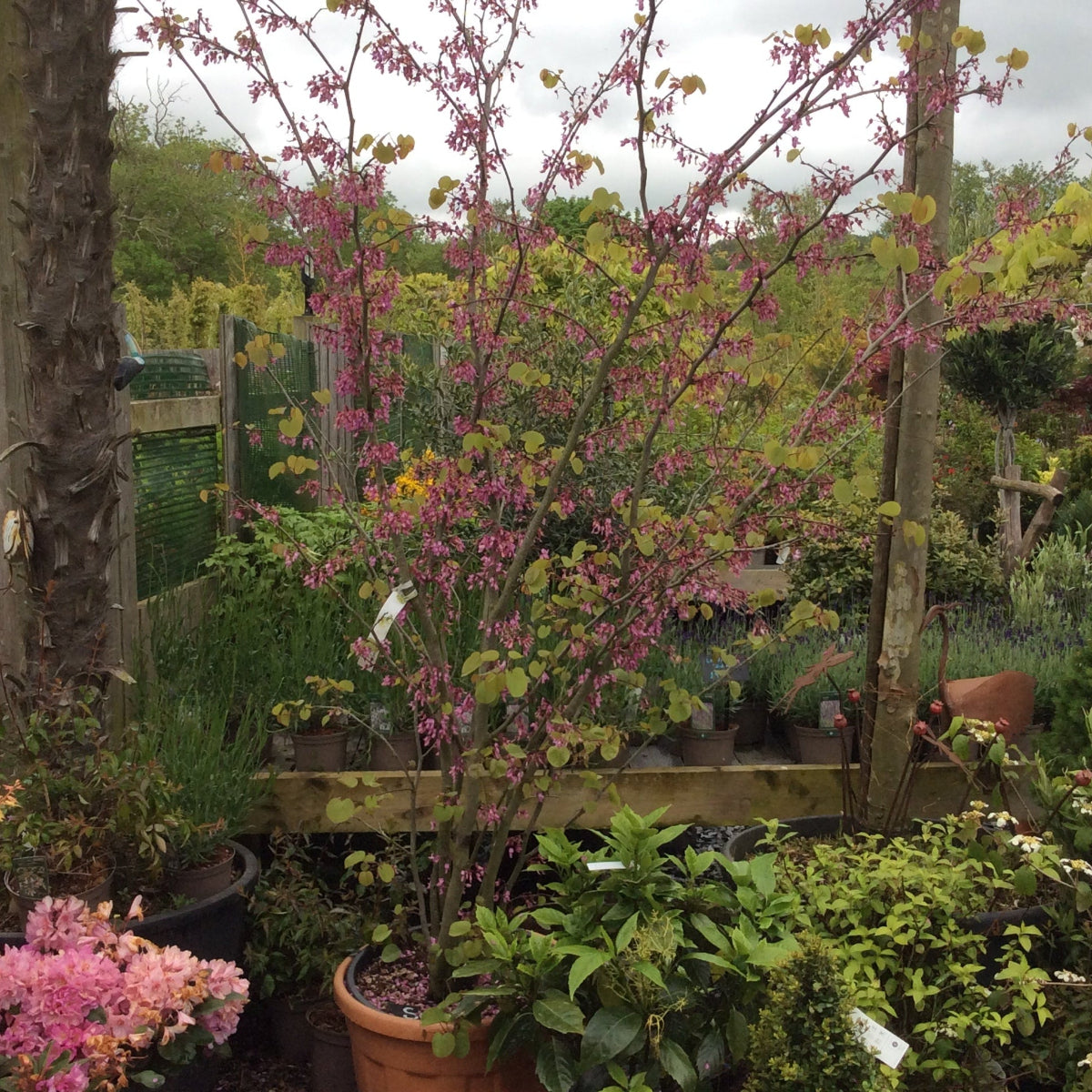
Few trees command attention quite like the Judas Tree in full bloom. In early spring, before a single leaf has unfurled, the bare branches erupt in a spectacular display of vivid rose-pink flowers — a sight that stops you in your tracks and signals the season has truly arrived.
As the flowers fade, rounded, glaucous-green leaves emerge, creating a lush, architectural canopy through summer. Come autumn, the foliage transforms into warm shades of gold and yellow, ensuring this tree earns its place in the garden across every season.
Why Choose Cercis siliquastrum?
- Spectacular spring blossom — vivid rose-pink flowers directly on the branches and trunk
- Multi-season interest — spring flowers, summer foliage, and rich autumn colour
- Architectural multistem form — sculptural structure with year-round presence
- Drought tolerant once established — well-suited to free-draining UK soils
- Wildlife friendly — flowers attract early pollinators including bees
Growing Conditions
Thrives in a sunny, sheltered position in well-drained soil. Ideal as a specimen tree in a lawn, courtyard, or large border. Fully hardy across most of the UK. Mature height and spread: approximately 6–8m.
Supplied as a multistem specimen, ready to make an immediate impact in your garden.
Couldn't load pickup availability
Low stock: 2 left


More details.
Planting Instructions
Planting Instructions
Cercis siliquastrum establishes best in a warm, sheltered, sunny position. Plant in spring or early summer to give the tree a full growing season before its first winter.
- Choose a sheltered, sunny spot — south- or west-facing is ideal, away from cold winds
- Dig a planting pit at least twice the width of the root ball and the same depth
- Requires well-drained soil — avoid heavy, waterlogged ground
- Incorporate organic matter into the backfill to aid establishment
- Water thoroughly after planting; apply a 5–10cm mulch ring, keeping mulch clear of the stems
- Stake securely in the first 1–2 seasons, especially in exposed positions
- Once established, Judas Tree is drought tolerant and largely self-sufficient
- Avoid hard pruning — remove dead or crossing wood only, ideally in late summer
Size & Specification
Size & Specification
Supplied as a premium multistem specimen tree, ready to make an immediate impact in your garden. Contact us to confirm exact sizing available at time of order.
- Species: Cercis siliquastrum (Judas Tree)
- Form: Multistem specimen — sculptural branching structure
- Mature height and spread: approximately 6–8m
- Growth rate: Slow to medium
- Approximate weight: 50kg — mechanical handling or two-person lift required
- Pot-grown or root-balled depending on season and availability
Delivery & Dispatch
Delivery & Dispatch
This is a large specimen tree requiring specialist pallet or flatbed delivery. All deliveries are kerbside to UK mainland only. Please allow 14–28 days for delivery.
- Delivered by specialist pallet or flatbed courier — not standard parcel delivery
- Kerbside delivery only — please arrange offloading and installation in advance
- We will contact you after ordering to confirm delivery date and logistics
- UK mainland only — Lancashire-based nursery
- Contact us before ordering for urgent or specific delivery date requirements
Wildlife & Ecological Notes
Wildlife & Ecological Notes
Cercis siliquastrum is a valuable early-season wildlife tree, producing abundant flowers in March and April before the leaves emerge — a critical time when little else is in bloom.
- Vivid rose-pink flowers provide early nectar and pollen for bees emerging in spring
- Attractive to bumblebees, solitary bees, and other early pollinators
- Seed pods persist into winter, providing food for birds and small mammals
- Dense multistem structure provides nesting habitat and cover for birds
- Autumn colour provides seasonal habitat transition for invertebrates