

Yew , Taxus baccata
Yew , Taxus baccata
Taxus baccata – Common Yew
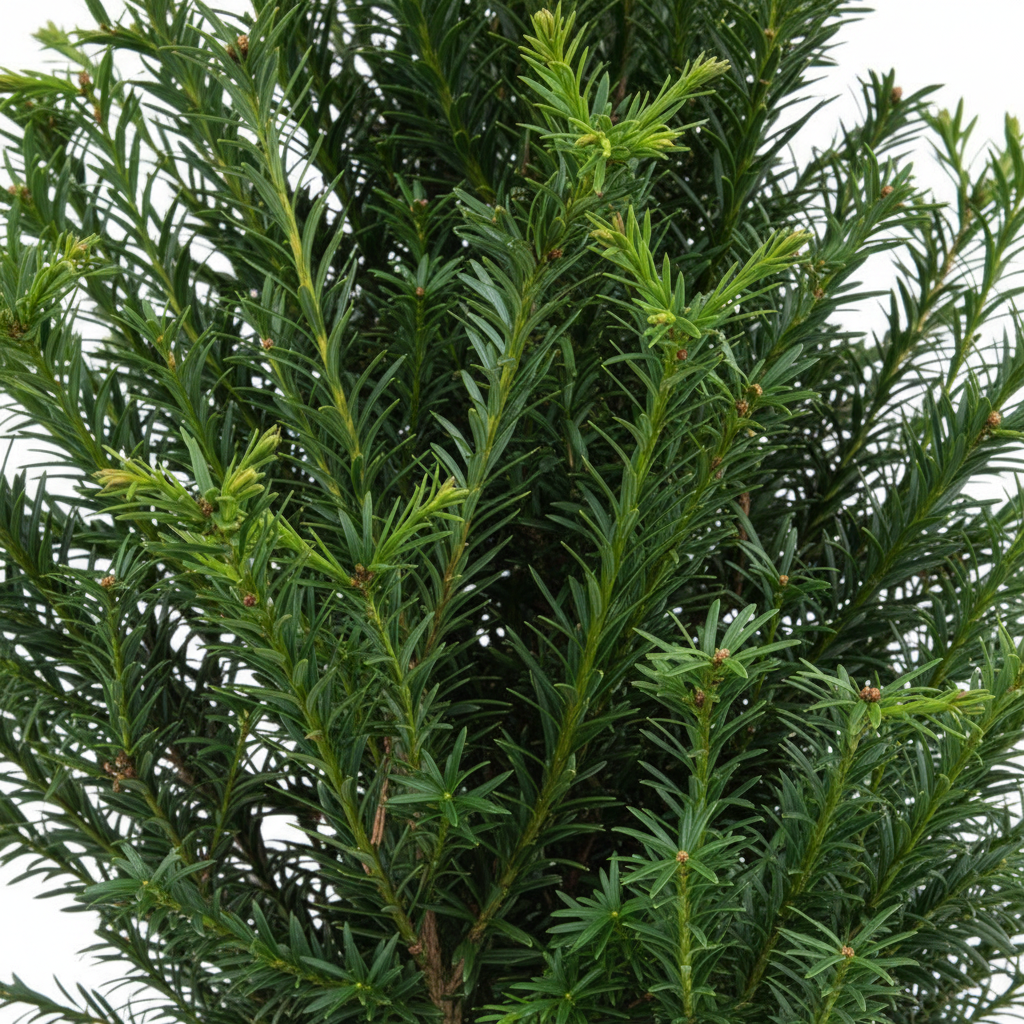
Create a classic, formal hedge with our native Common Yew. This medium-sized evergreen is one of the finest hedging plants available, featuring dense, very dark green needle-like foliage arranged in two rows on the shoots. Yew is the ultimate choice for formal hedging and topiary, responding beautifully to clipping and maintaining its shape for centuries. As a UK native species, it is perfectly adapted to British conditions.
Key Features
- Classic British Native: The traditional choice for formal hedging and topiary
- Dense Dark Green Foliage: Very dark green needle-like leaves create a solid, elegant hedge
- Excellent for Topiary: Responds superbly to clipping and shaping
- Long-Lived: Can live for hundreds of years, becoming more beautiful with age
- Shade Tolerant: One of the few conifers that thrives in shade
- Wildlife Value: Female plants produce fleshy red arils that feed birds
- Very Hardy: Tolerates most conditions including deep shade and chalk soils
Growing Information
Pot Size: 2–3 litre. Ultimate Height: 10–20m (easily maintained at 1–2m for hedging). Ultimate Spread: 4–8m. Planting Density: 3 plants per metre for hedging. Growth Rate: Slow (10–30cm per year). Position: Full sun to full shade. Soil: Well-drained, tolerates most soil types including chalk. Hardiness: Fully hardy (RHS H5).
Planting & Care
Plant from autumn to spring in well-drained soil. Yew is remarkably adaptable and thrives in sun or shade, making it perfect for difficult shady areas. Space plants 30–35cm apart (3 per metre) for hedging. Water regularly during the first growing season. Feed with a balanced fertiliser in spring. Trim once a year in late summer to maintain shape. The slow growth rate means less frequent trimming is needed compared to faster-growing hedges.
Important Safety Information
Warning: All parts of yew except the red aril are toxic if ingested. Plant away from areas where children and animals might eat the foliage. Despite this, yew has been safely grown in UK gardens and churchyards for centuries with appropriate precautions.
Perfect For
- Formal hedging and boundaries
- Topiary and shaped features
- Shady areas where other conifers fail
- Traditional and contemporary gardens
- Long-term investment planting
- Chalk and alkaline soils
- Creating garden structure and architecture
Couldn't load pickup availability
Low stock: 2 left

More details.
Planting Instructions
Plant from autumn to spring in well-drained soil in full sun to full shade. Tolerates most soil types including chalk and clay. Space 30–35cm apart (3 per metre) for hedging. Avoid waterlogged conditions.
Water regularly during the first growing season. Feed with a balanced fertiliser in spring. Trim once a year in late summer to maintain shape. Yew responds excellently to clipping and can be maintained at any desired height. Note: all parts of yew except the red aril are toxic if ingested — plant away from areas accessible to children and animals.
Size & Specification
Supplied in a 2–3 litre pot. Ultimate height 10–20m (easily maintained at 1–2m for hedging). Ultimate spread 4–8m. Planting density 3 plants per metre. Slow growth rate (10–30cm per year). Fully hardy (RHS H5). Fully evergreen.
Delivery & Dispatch
Dispatched within 3–5 working days via overnight courier in protective packaging. Plants are carefully packaged to protect roots and foliage during transit. Please ensure someone is available to receive the delivery.
Wildlife & Ecological Notes
Female plants produce fleshy red arils in autumn which are an important food source for thrushes, blackbirds, and waxwings. The dense, dark evergreen canopy provides excellent year-round shelter and nesting cover for garden birds. As a native species, yew supports a range of native invertebrates. One of the most ecologically valuable native conifers for UK wildlife.